The Matrix Verb System
Name the tenses

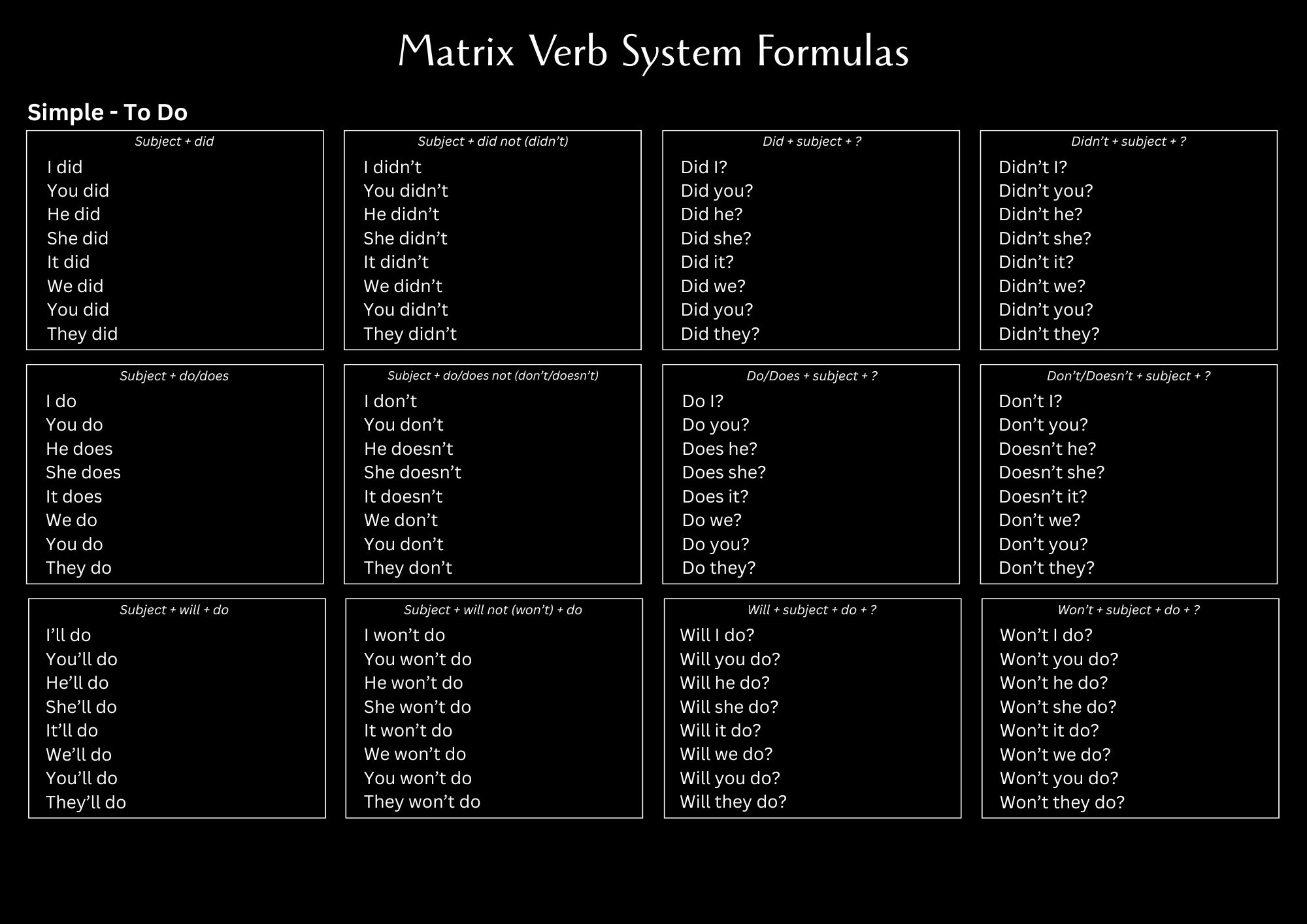
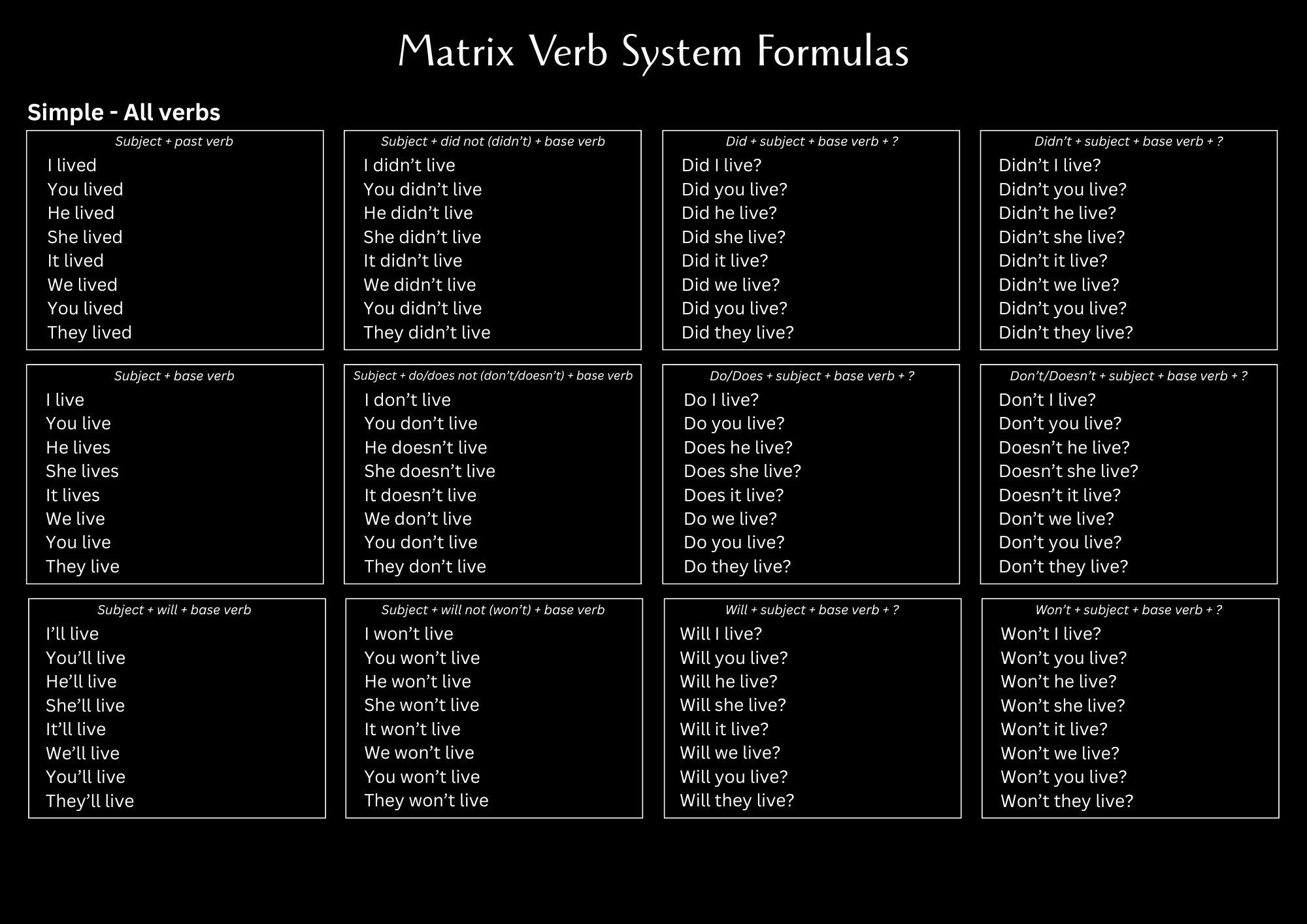
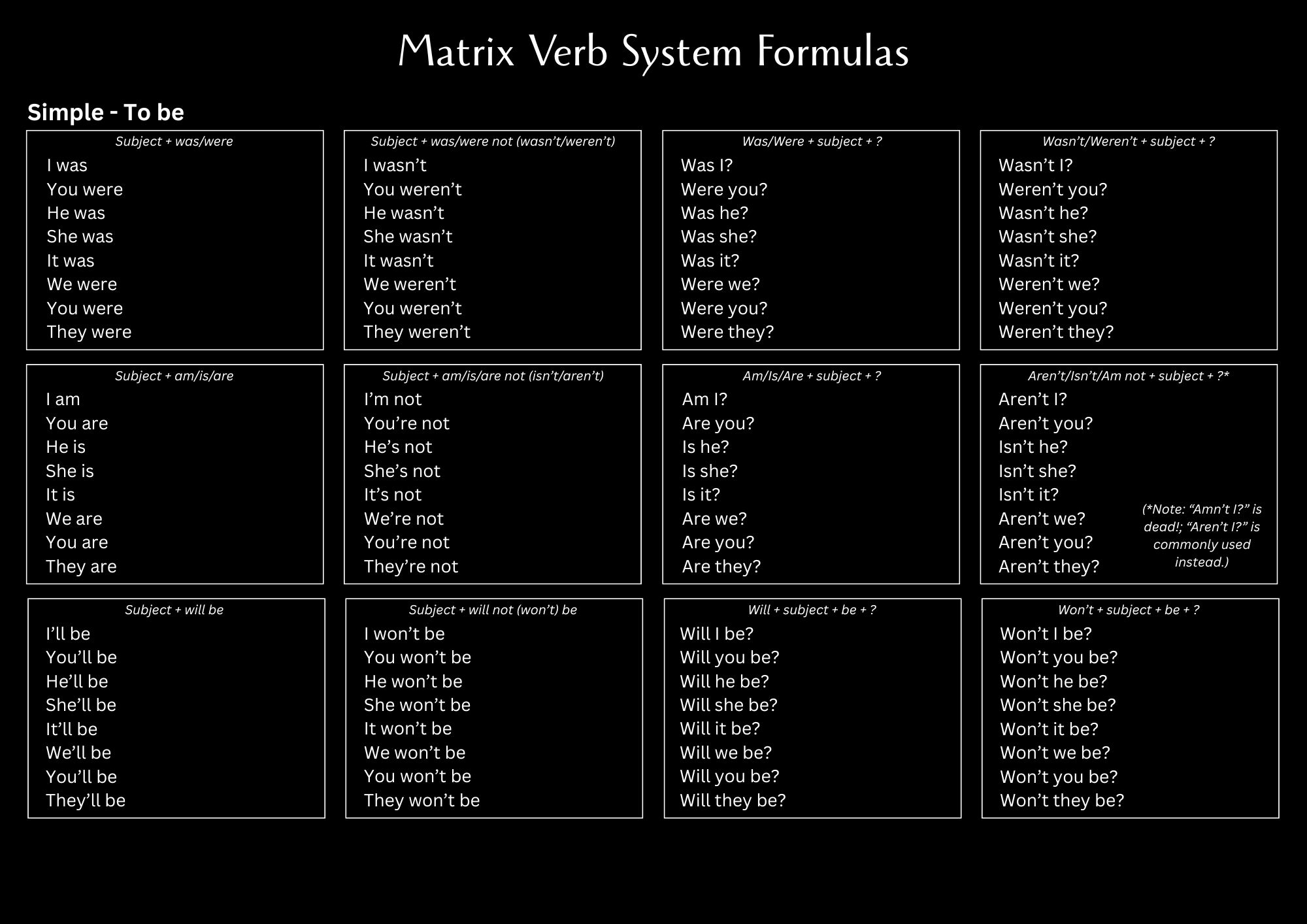
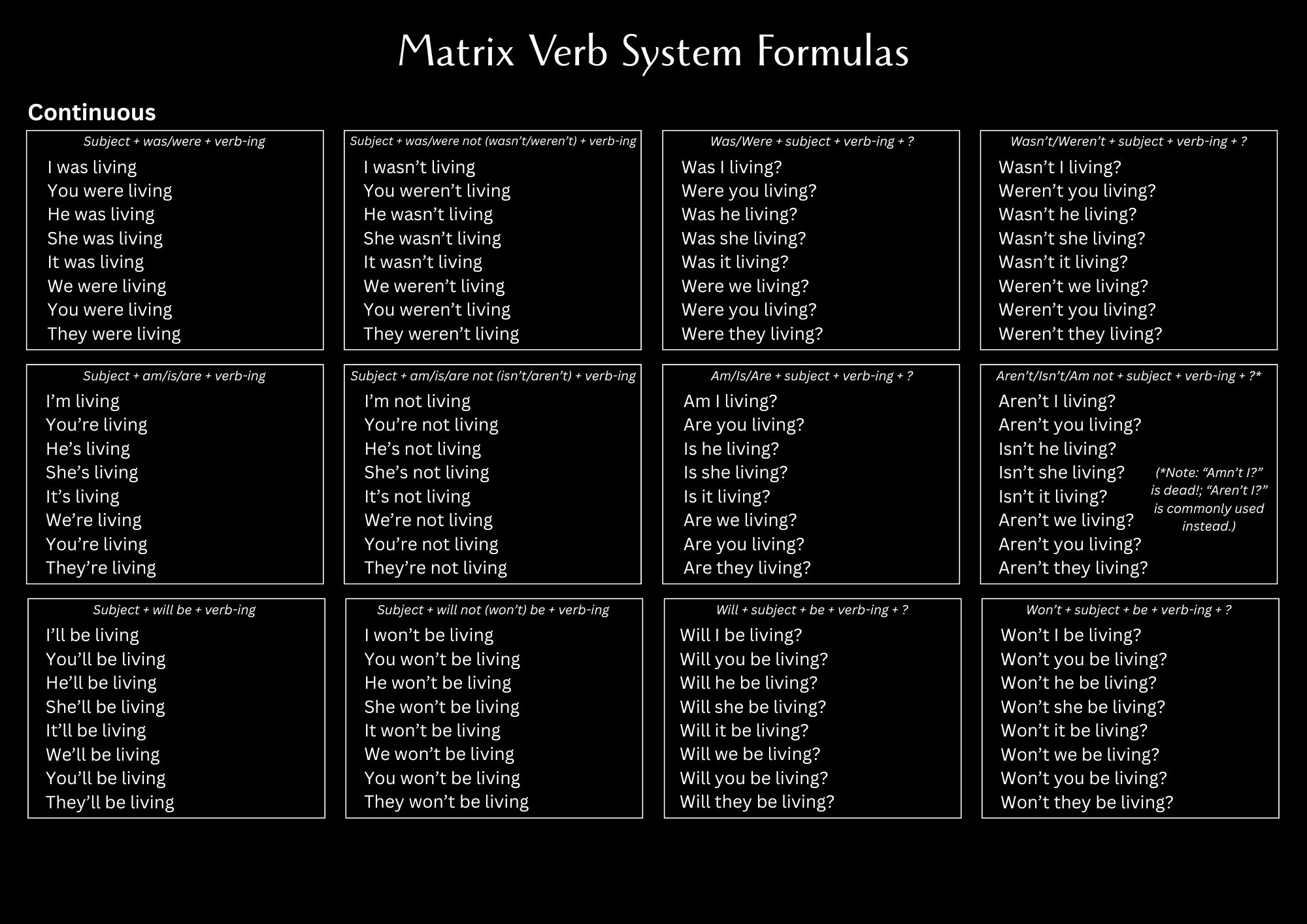
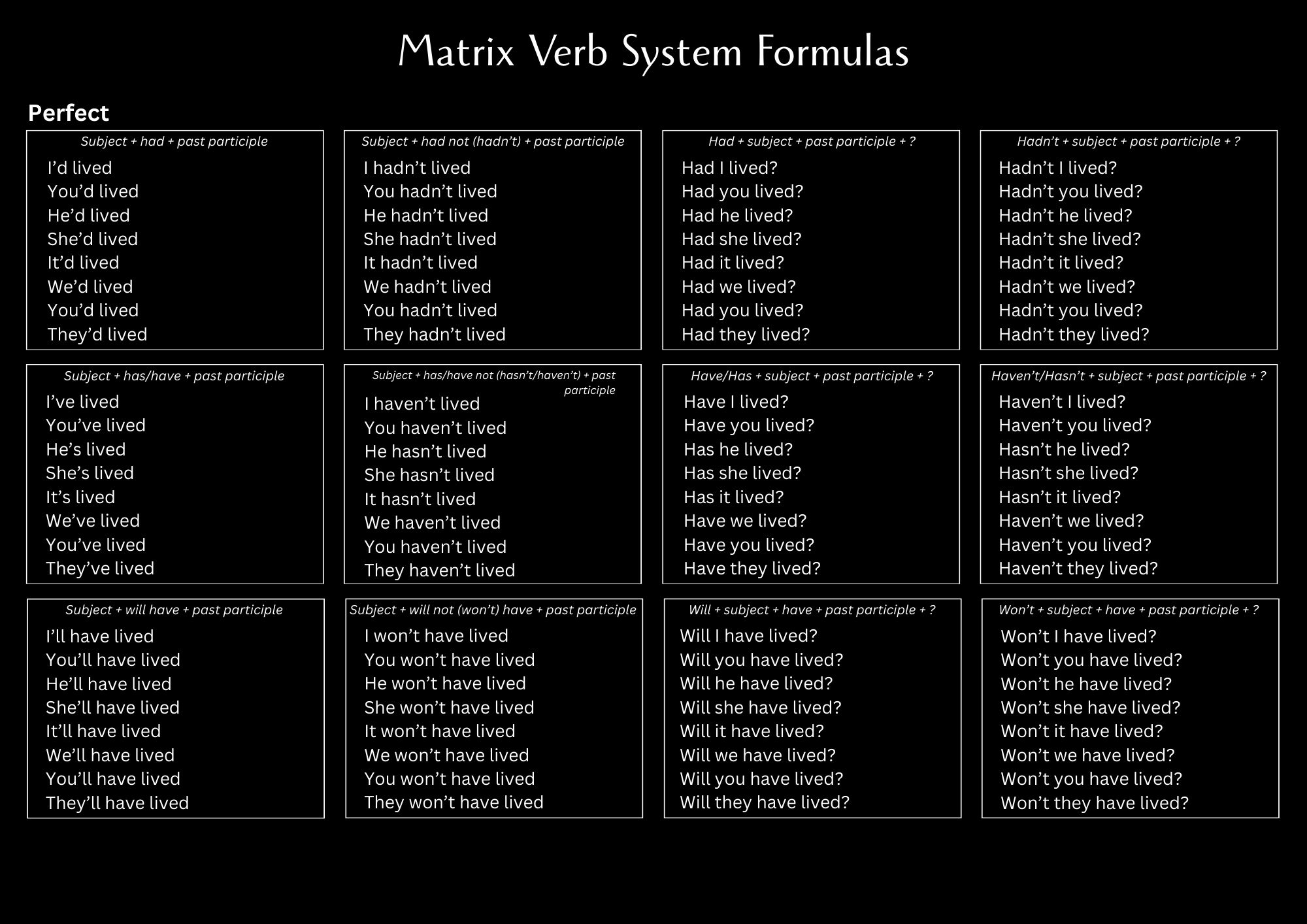
Learn the formulas

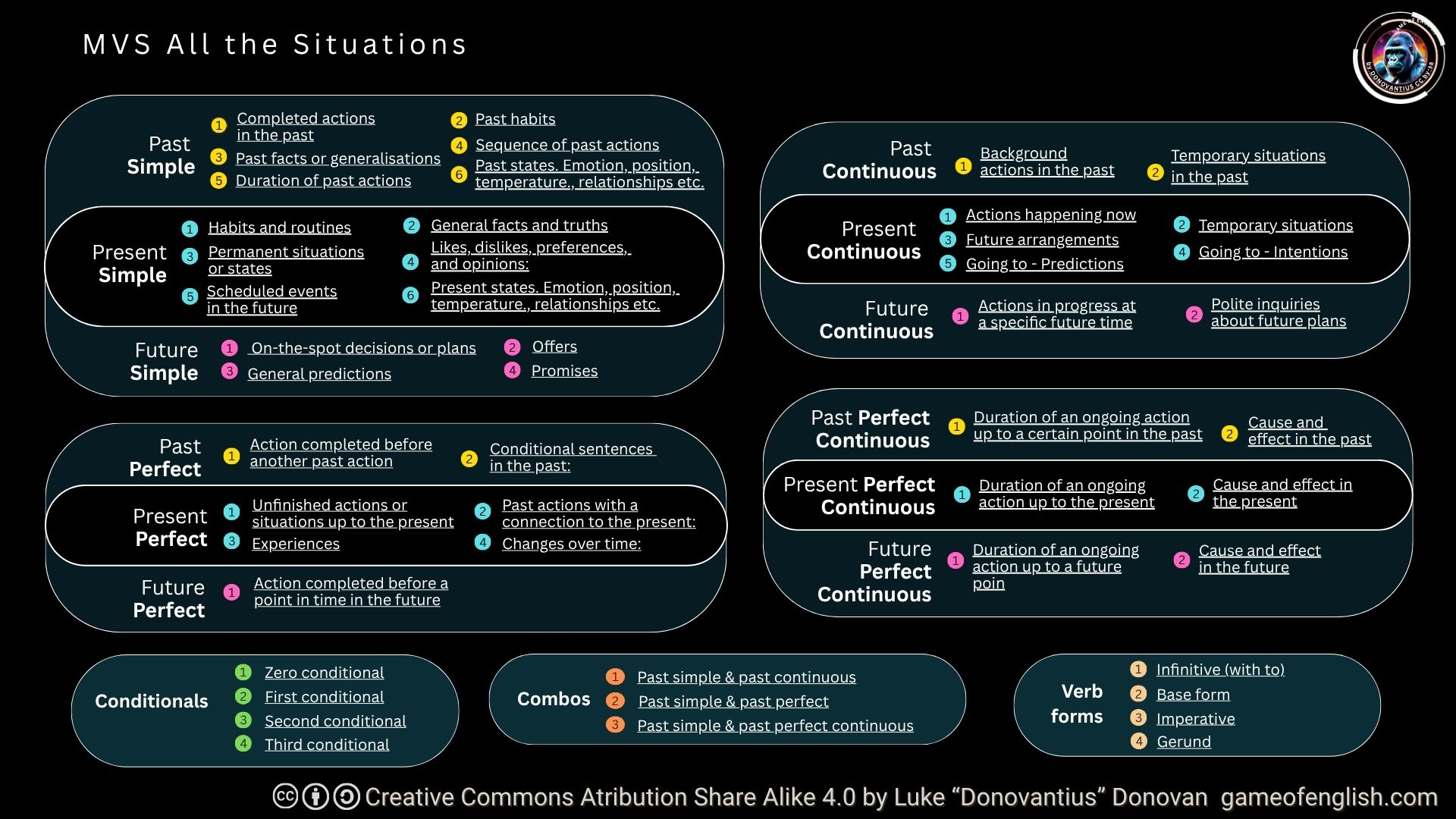
Know the situations

MVS Dots - The Verb Matrix

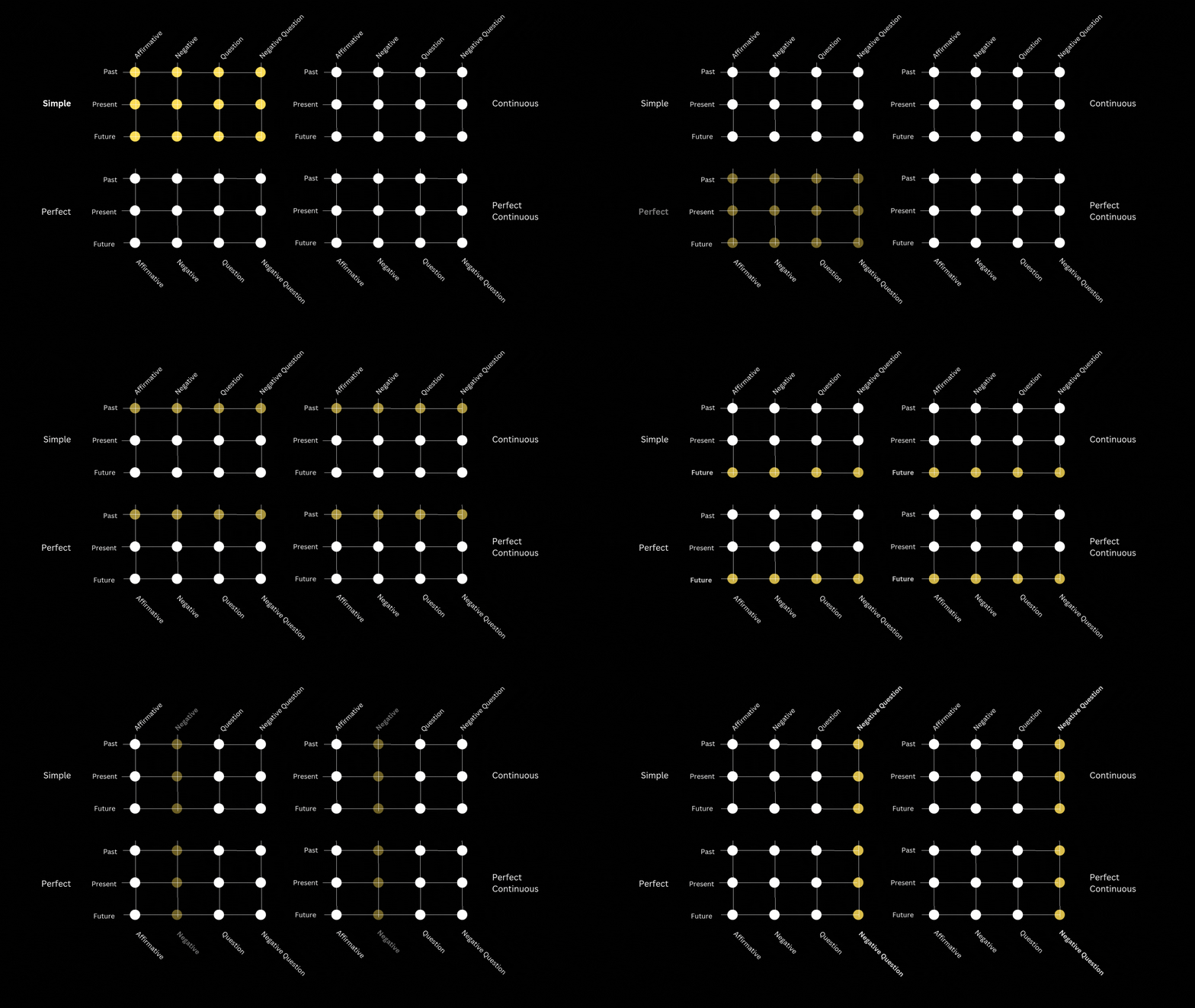
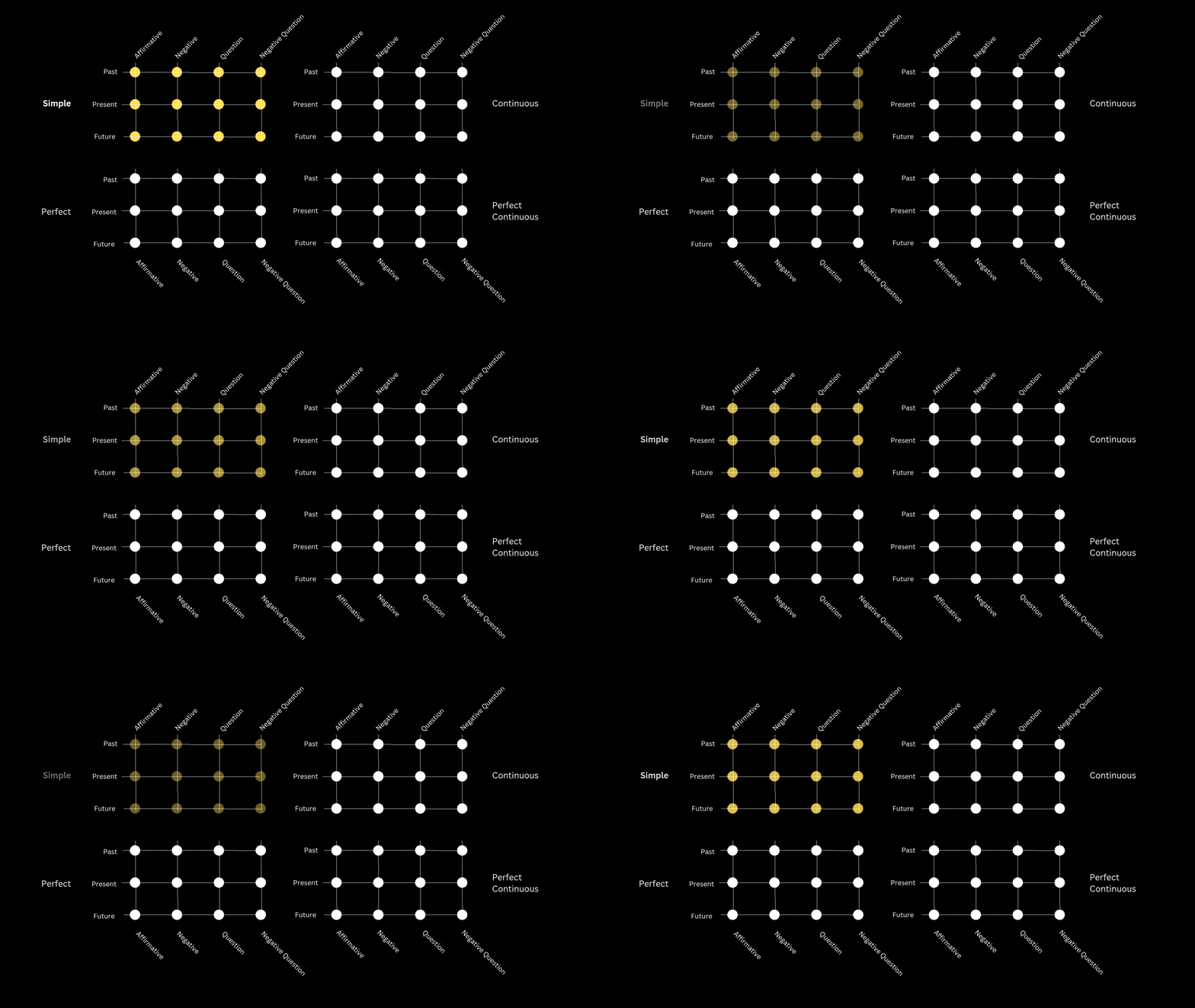
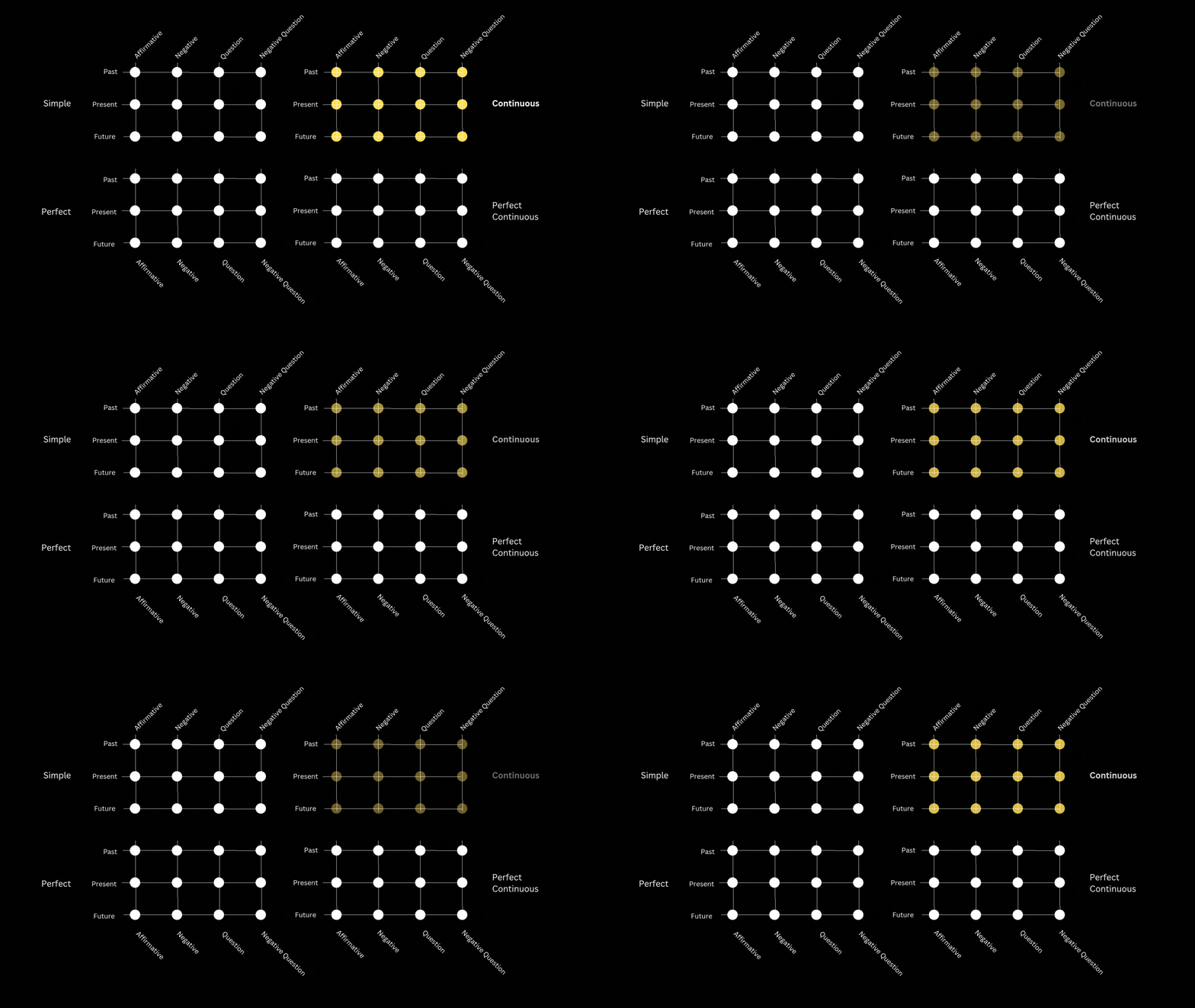
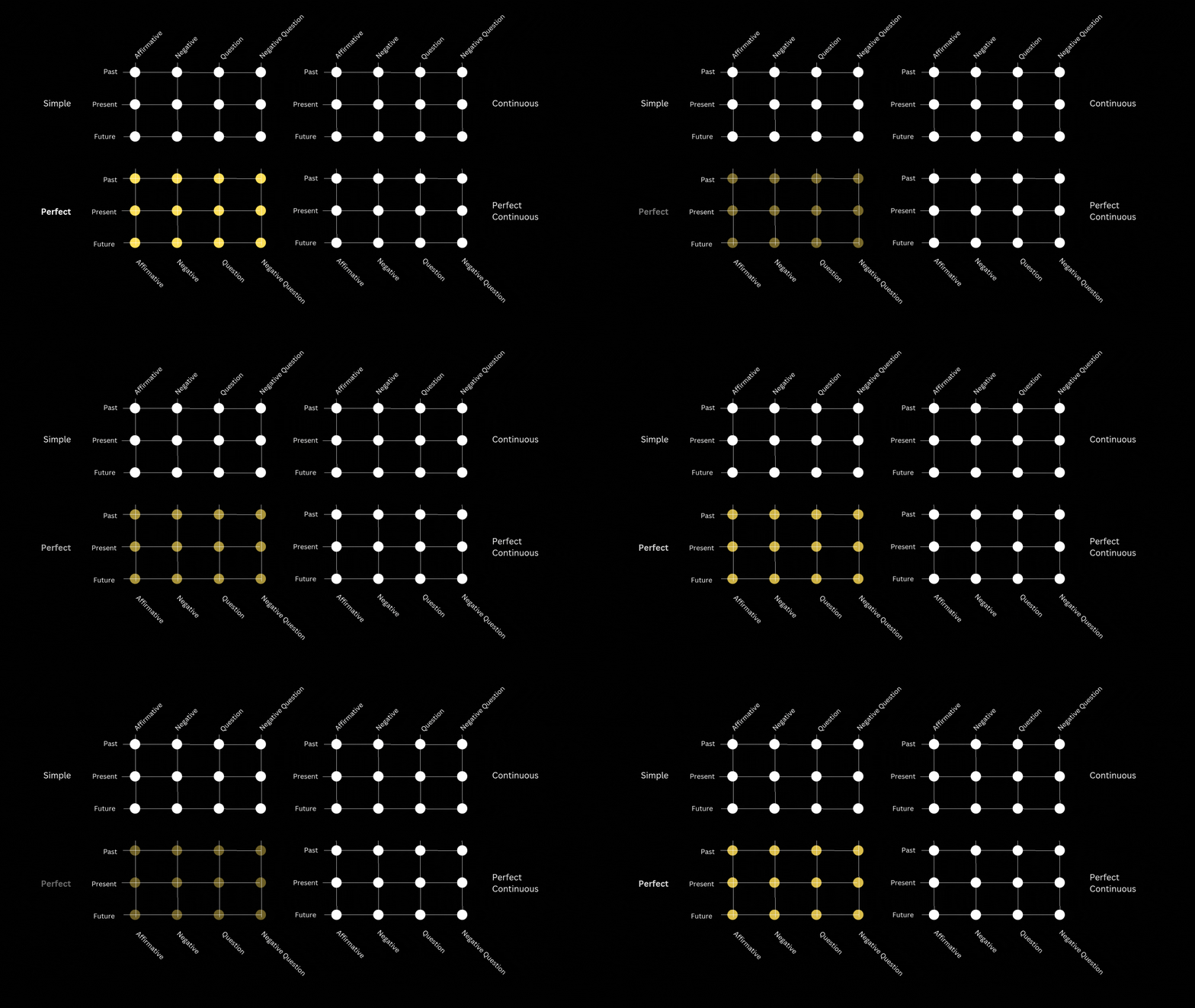
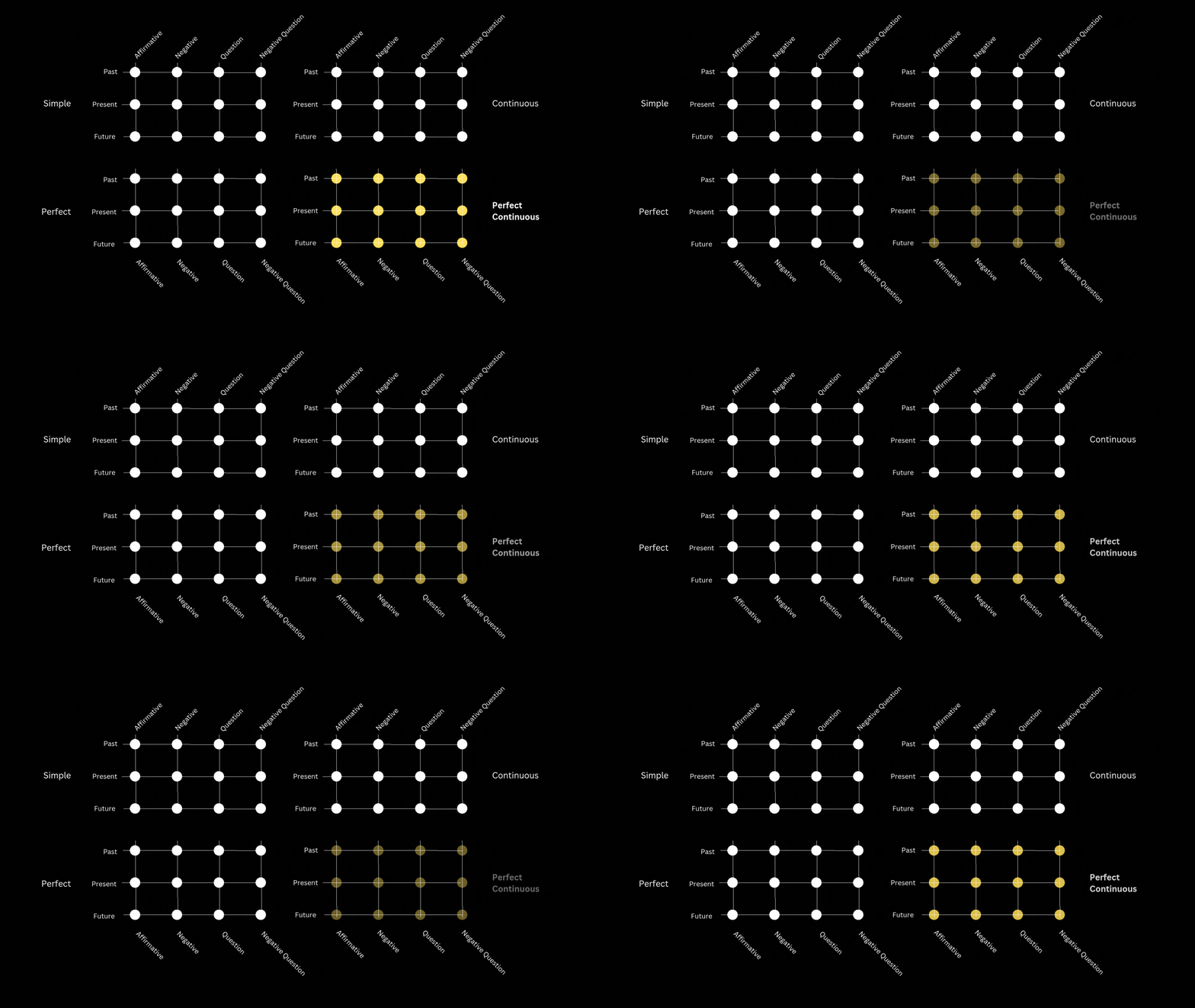
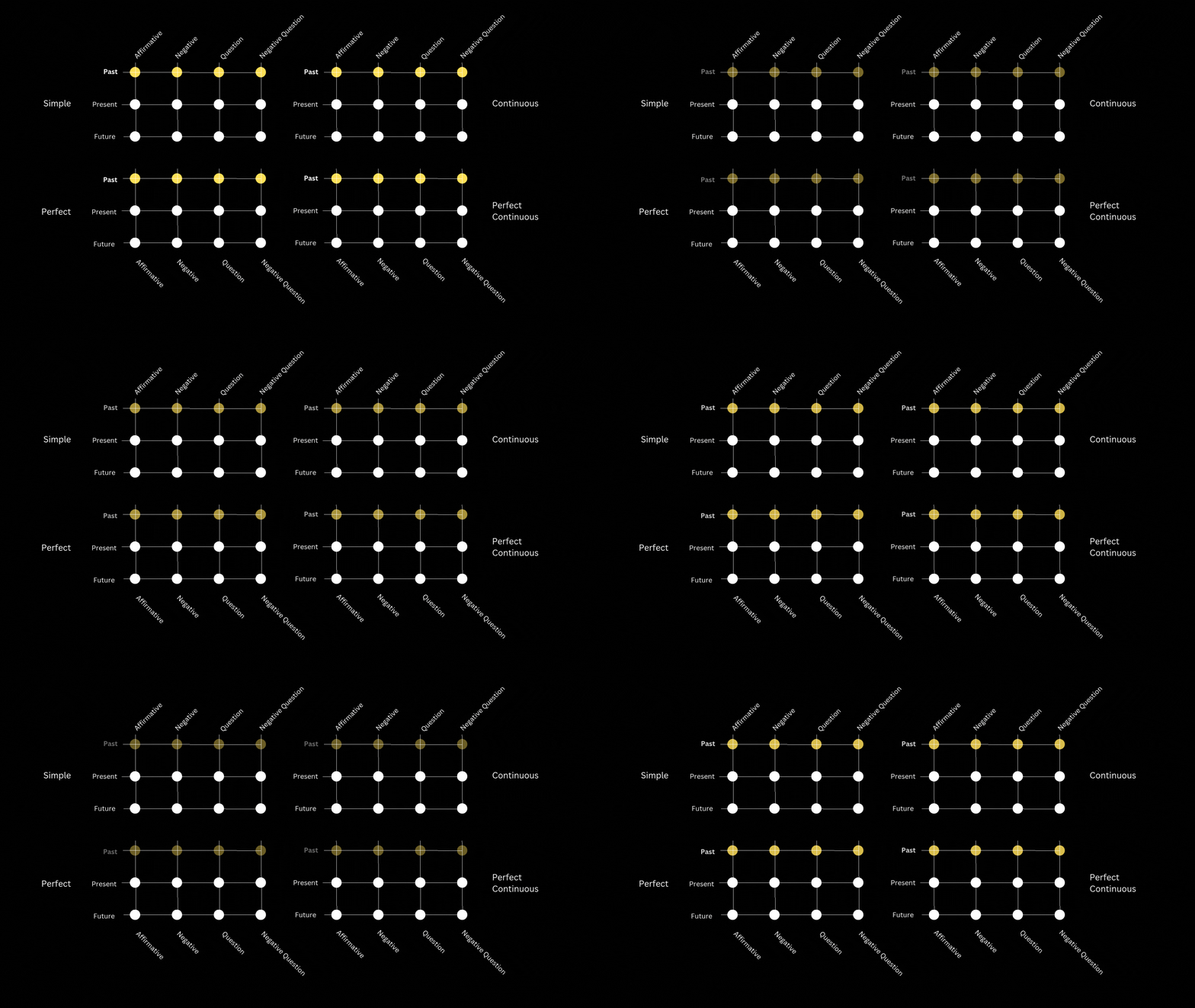
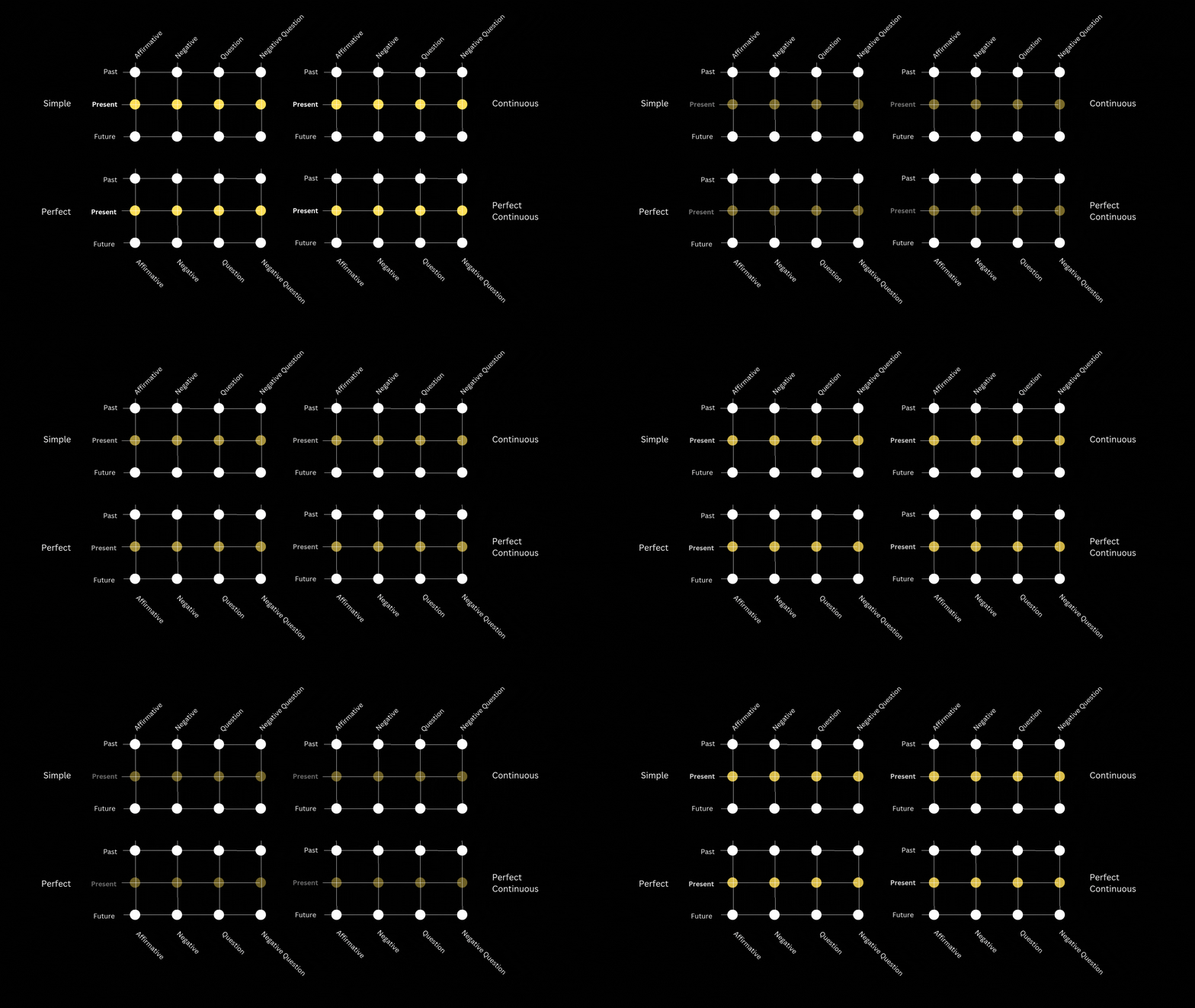
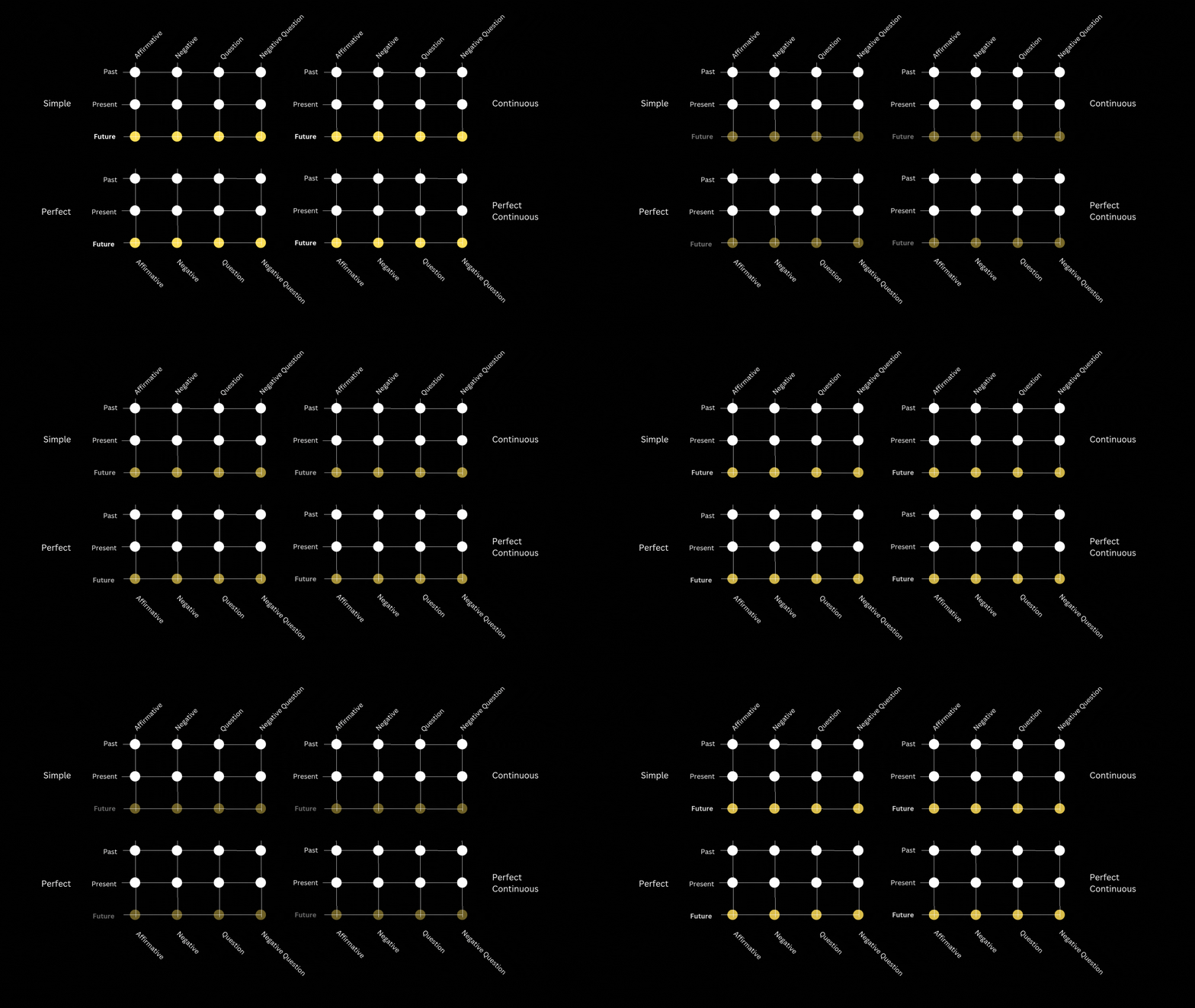
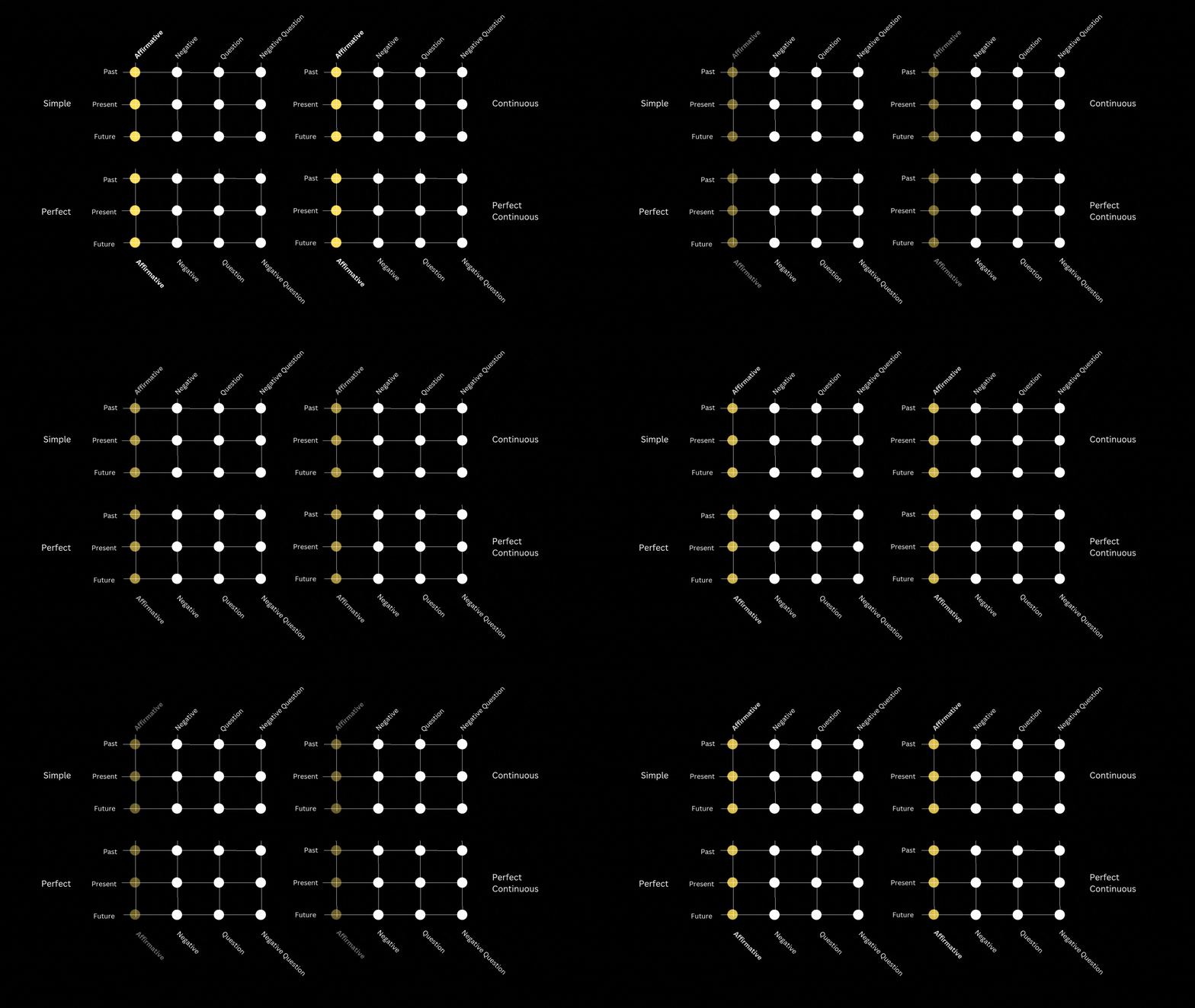
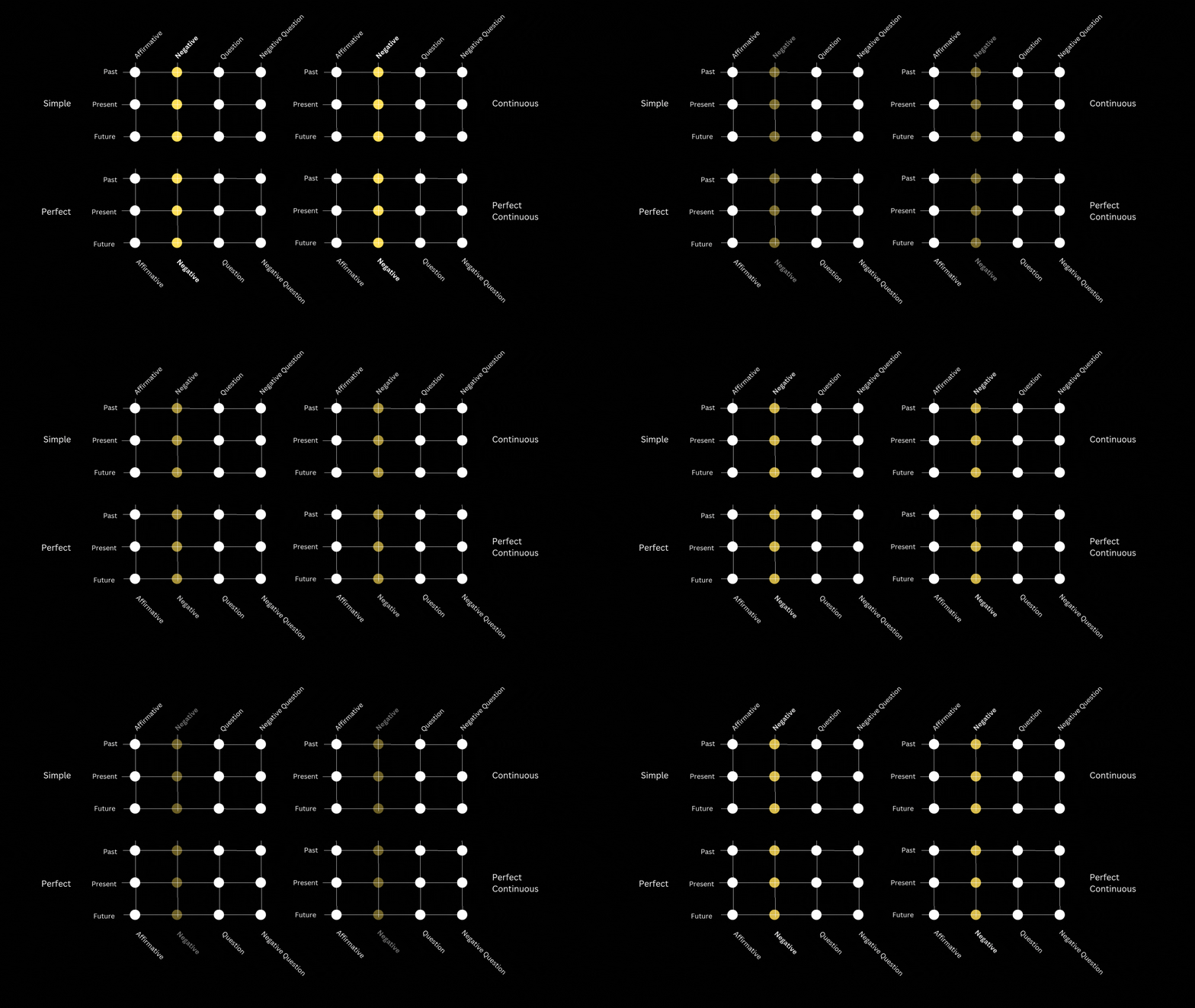
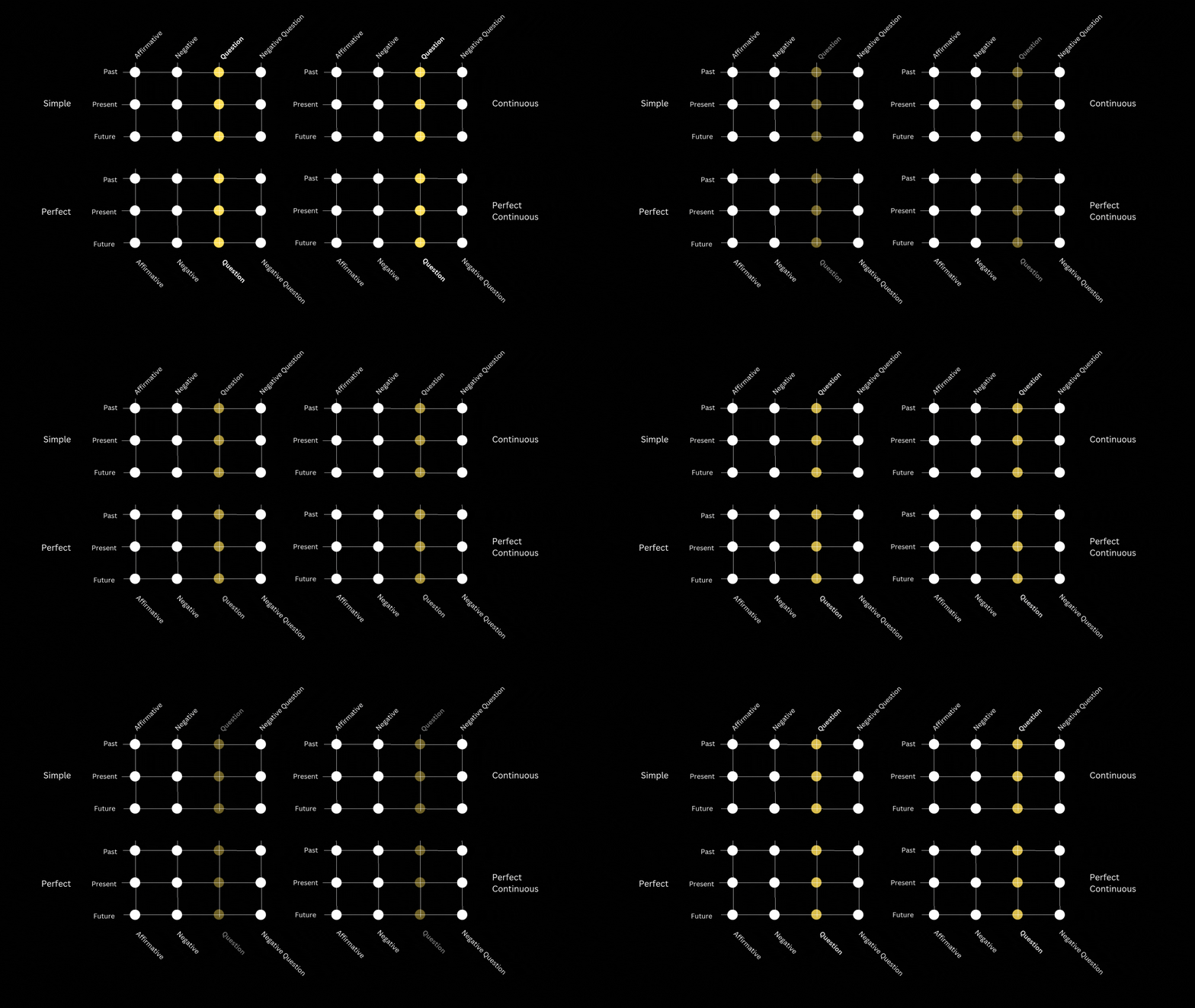
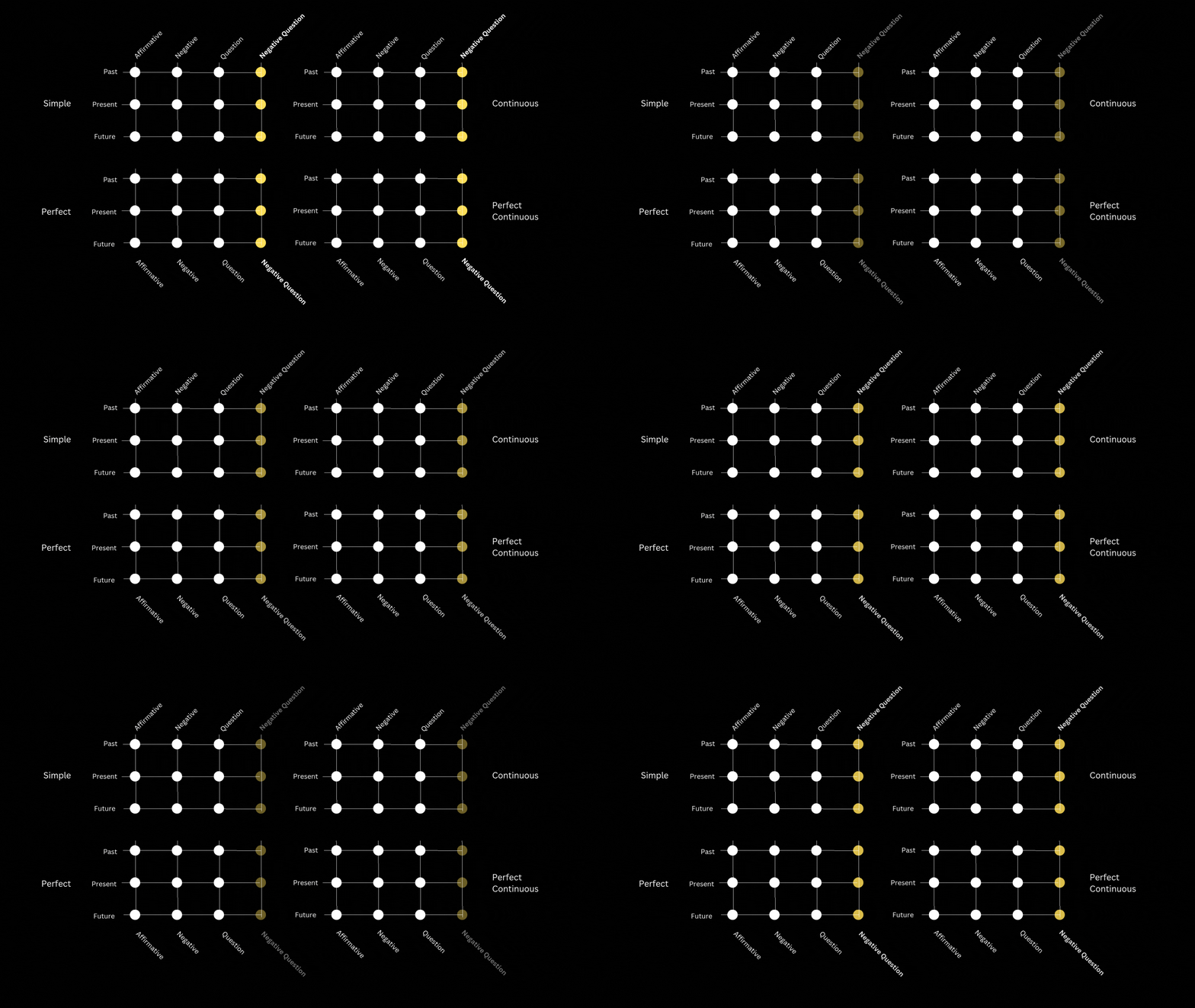
The MVS Verb Matrix uses a pattern of dots to represent the variables of the verb tenses in English.

Learn it and use it to understand the entire system of verbs and quickly use the correct tense every time, automatically, without thinking.

Time:

  • Past
  • Present
  • Future

Kind of Tense:

  • Simple
  • Continuous
  • Perfect
  • Perfect Continuous

Variation:

  • Affirmative
  • Negative
  • Question
  • Negative Question

Creative Commons Attribution Share Alike 4.0 by Luke “Donovantius” Donovan gameofenglish.com 2025
MVS - Mantra & Formulas

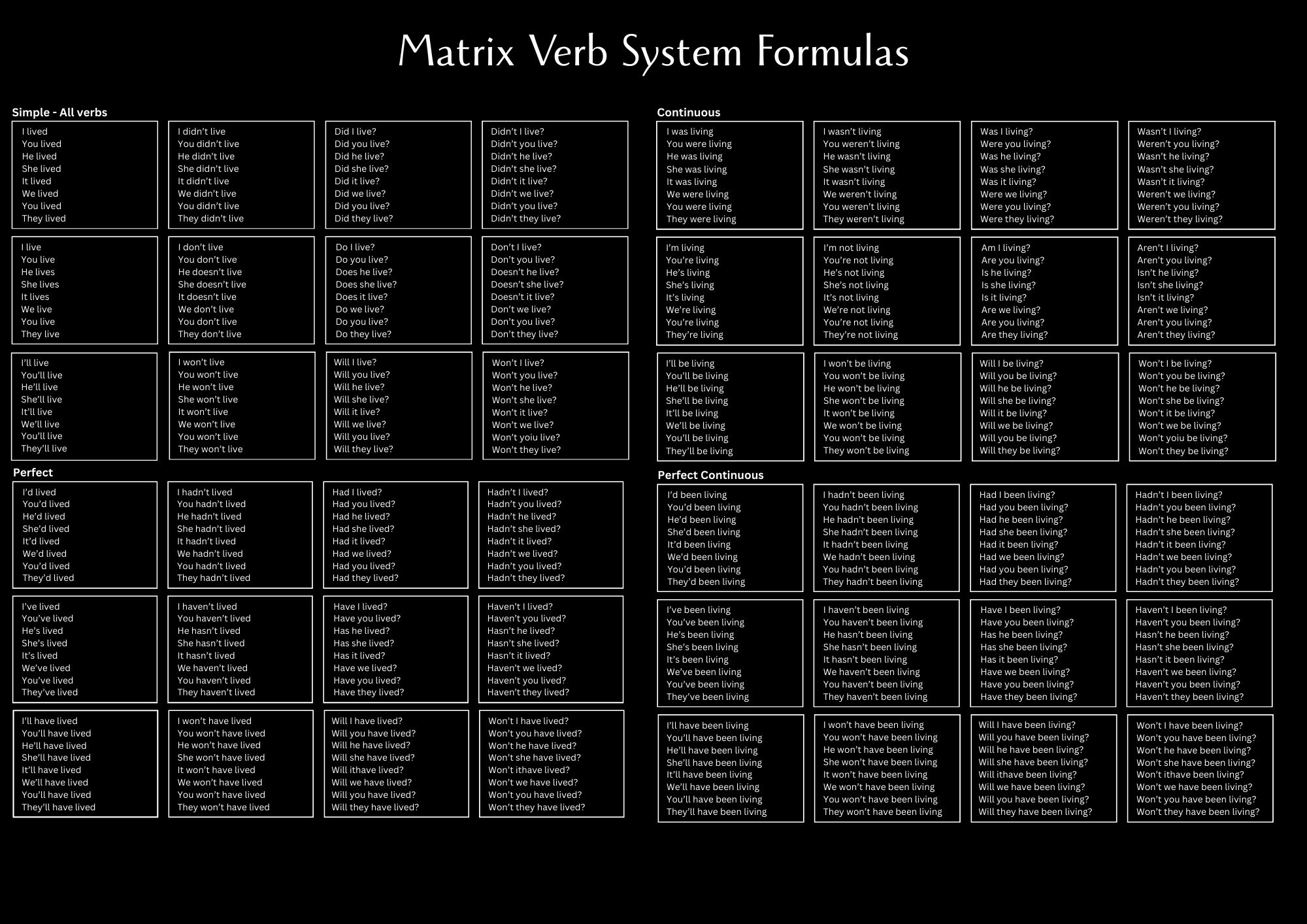
Formulas

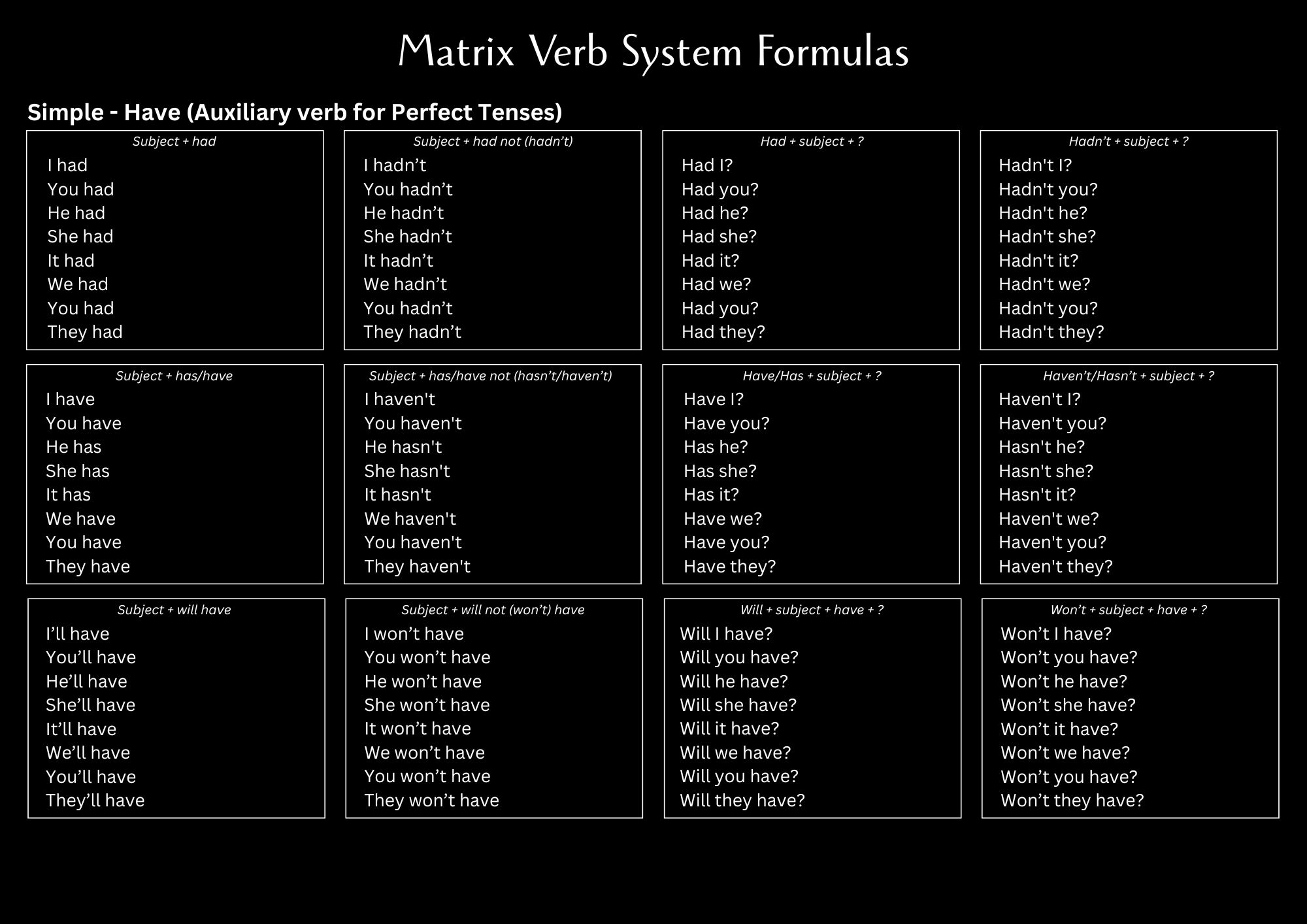
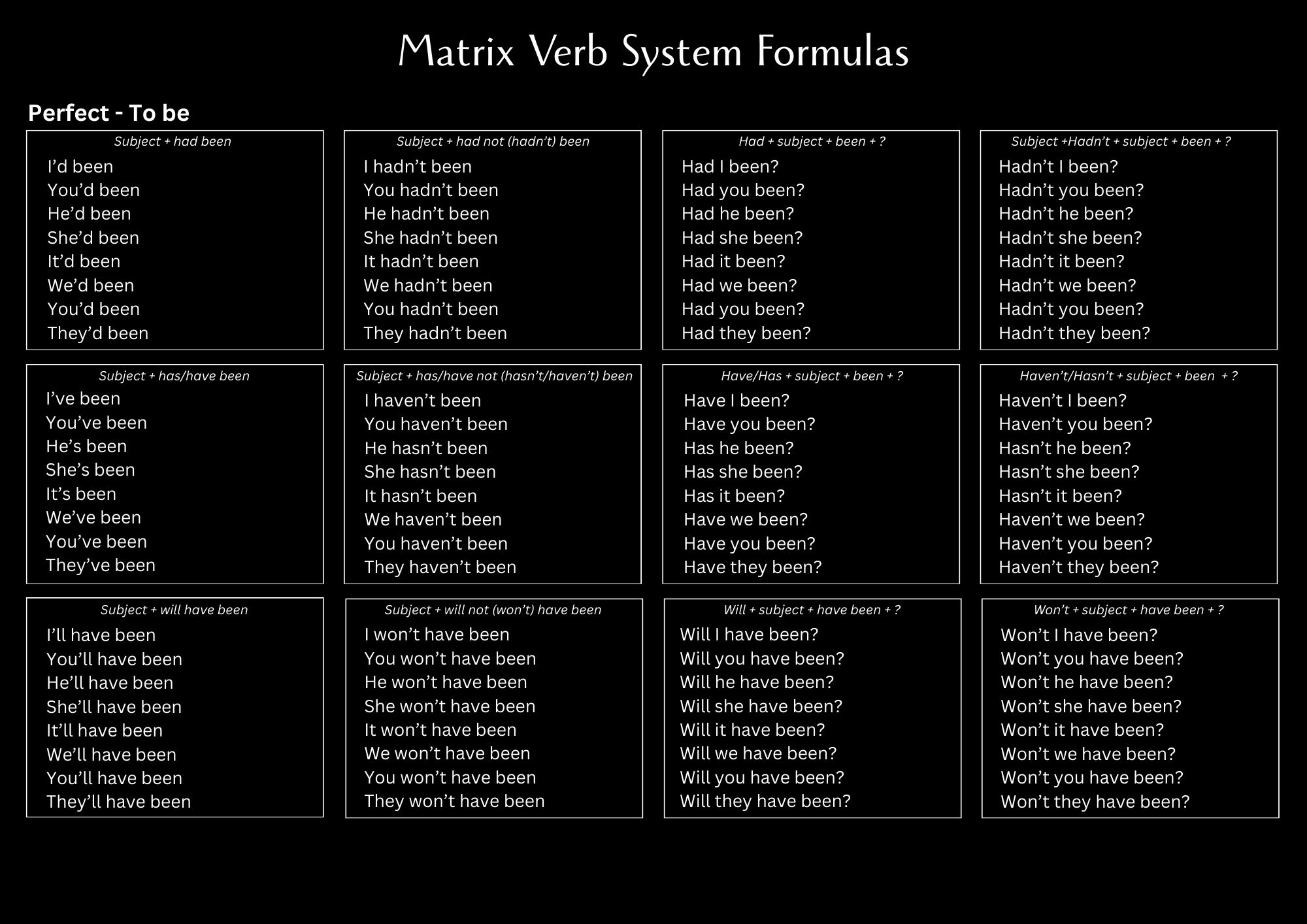
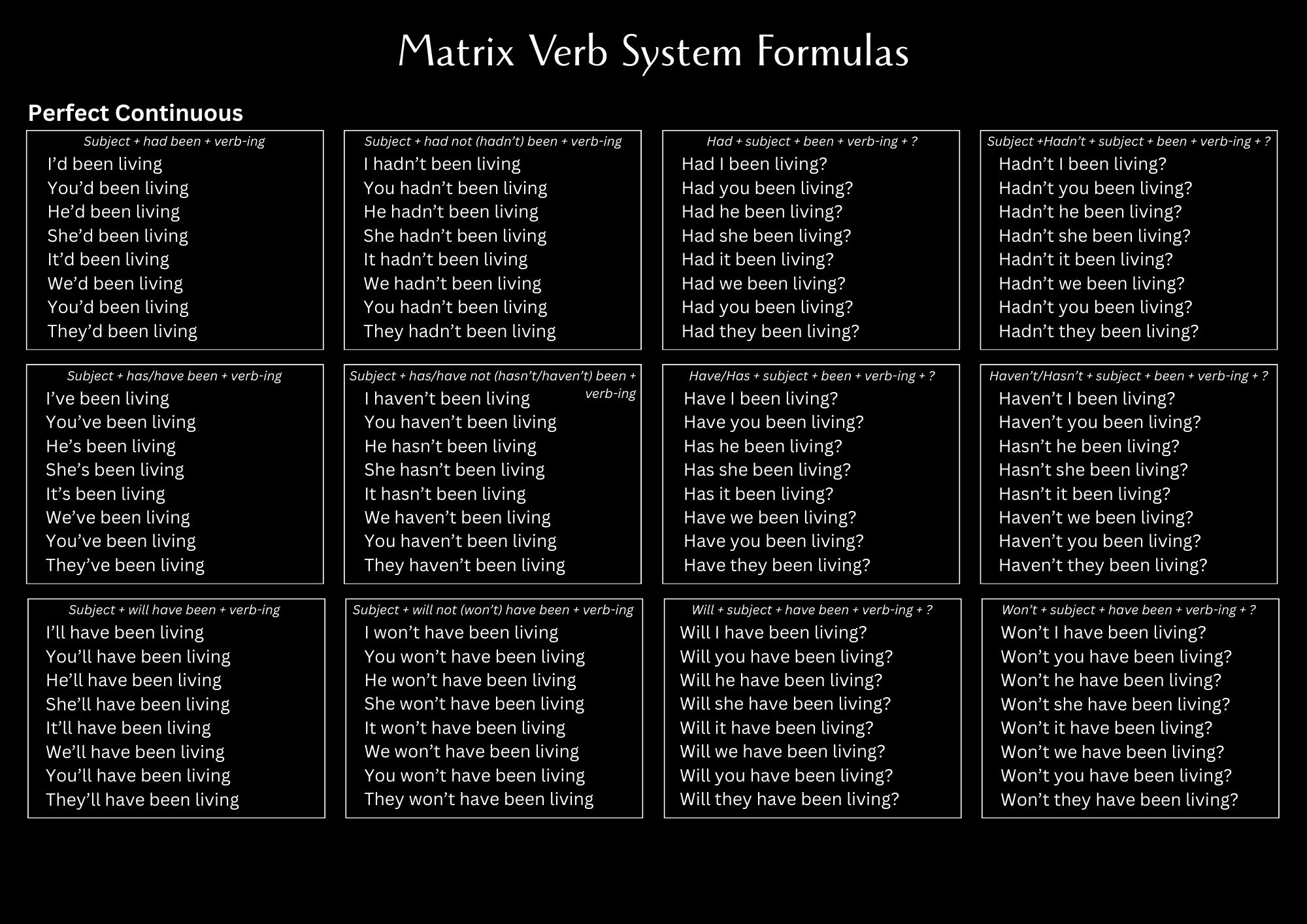
The verb tenses are organised in the same pattern as the dots of the Matrix Verb System. Study the examples and formulas to understand the logic behind the system of verb tenses and memorise them so that you can use them without thinking.


Mantras.

The mantras contain essential information regarding the formulas and uses of the verb tenses and the pronouns.

Memorise the mantras to move to intermediate level as quickly as possible. If you have already achieved intermediate level,  learn the mantras to eliminate simple mistakes that learners often bring to higher levels, and to strengthen the foundations of your grammar knowledge.

    Creative Commons Attribution Share Alike 4.0 by Luke “Donovantius” Donovan gameofenglish.com 2025
    MVS - Verb Mantra - (Short Version)

    Simple …Easy

    Past simple… All the same

    Present simple… He/she/it – S

    Future simple… All the same


    Continuous… To be, i n g

    An action happening… at a point in time.

    Past continuous… past of to be.

    Present continuous… present of to be.

    Future continuous… future of to be.


    Perfect… Have, P.P.

    An action completed… before a point in time.

    Past perfect… past of have.

    Present perfect… present of have.

    Future perfect… future of have.


    Perfect continuous… Have, P.P. , to be, i n g

    An action happening… up to, or just before a point in time.

    Past perfect continuous… past of have.

    Present perfect continuous… present of thave.

    Future perfect continuous… future of have.

    MVS - The Full Verb Mantra - (This explains the Mantra in detail)

    Simple …Easy 


    Past simple… All the same – In the past simple the formula is the same for all six persons.


    Present simple… He/she/it – S – In the present simple the formula is not the same for all six persons. In third person singular we add an “s” to the verb or auxiliary verb.


    Future simple… All the same – In the future simple the formula is the same for all six persons.


    Continuous… To be, i n g – To make a continuous tense use the auxiliary verb “to be” and the “ing” form of the main verb. If you see or hear the auxiliary verb “to be” and the “ing” form of the main verb, that’s a continuous tense.


    An action happening… at a point in time. – The main idea of the continuous tenses is that an action is happening at a point in time.


    If the point in time when the action is happening is in the past, that’s past continuous.


    If the point in time when the action is happening is right now, that’s present continuous.


    If the point in time when the action is happening is in the future, that’s future continuous.


    Past continuous… past of to be. – To make the past continuous, use the past simple form of the auxiliary verb “to be.” 


    Present continuous… present of to be. – To make the present continuous, use the present simple form of the auxiliary verb “to be.”

    Future continuous… future of to be. – To make the future continuous, use the future simple form of the auxiliary verb “to be.” \


    Perfect… Have, P.P. – To make a perfect tense use the auxiliary verb “have” and the past participle (P.P.) of the main verb. If you see or hear the auxiliary verb “have” and the past participle of the main verb, that’s a continuous tense.


    An action completed… before a point in time. – The main idea of the perfect tenses is that an action is completed before a point in time.


    If the action is completed before a point in time in the past, that’s past perfect.

    (If the point in time before which the action is completed is in the past, that’s past perfect.)


    If the action is completed before a point in time in the present (right now), that’s present perfect.

    (If the point in time before which the action is completed is in the present (right now), that’s present perfect.)


    If the action is completed before a point in time in the future, that’s future perfect.

    (If the point in time before which the action is completed is in the future, that’s future perfect.)


    Past perfect… past of have. – To make the past perfect, use the past simple form of the auxiliary verb “have.” 


    Present perfect… present of have. – To make the present perfect, use the present simple form of the auxiliary verb “have.” 


    Future perfect… future of have. – To make the future perfect, use the future simple form of the auxiliary verb “have.” 


    Perfect continuous… Have, P.P. , to be, i n g – To make a perfect continuous tense use the auxiliary verb “have”, the past participle (P.P.) of “to be” (been) and the “ing” form of the main verb. If you see or hear the auxiliary verb “have”, the past participle (P.P.) of “to be” (been) and the “ing” form of the main verb, that’s a perfect continuous tense.


    An action happening… up to, or just before a point in time. – The main idea of the perfect continuous tenses is that an action is happening up to, or just before a point in time.


    If the action is happening up to, or just before a point in time in the past, that’s past perfect continuous.


    If the action is happening up to, or just before a point in time (right now) in the present, that’s present perfect continuous.


    If the action is happening up to, or just before a point in time in the future, that’s future perfect continuous.


    Past perfect continuous… past of have. – To make the past perfect continuous, use the past simple form of the auxiliary verb “have.” 


    Present perfect continuous… present of have. – To make the present perfect continuous, use the present simple form of the auxiliary verb “have.” 


    Future perfect continuous… future of have. – To make the future perfect continuous, use the future simple form of the auxiliary verb “have.” 


    MVS - Make it Game

    How to Play the make it Game.

    1. Start at Present Simple Affirmative and say a senence with one verb.

    eg. I play football.


    2. Then say one of these options:

    • Make it First Person Singular.
    • Make it Second Person Singular.
    • Make it Third Person Singular Masculine.
    • Make it Third Person Singular Feminine.
    • Make it Third Person Singular Neuter.
    • Make it First Person Plural.
    • Make it Second Person Plural.
    • Make it Third Person Singular Plural.

    Or… One of these options

    • Make it Past.
    • Make it Present
    • Make it Future.

    Or… One of these options

    • Make it Affirmative.
    • Make it Negative.
    • Make it a Question.
    • Make it a Negative Question.

    Or… One of these options

    • Make it Simple.
    • Make it Continuous.
    • Make it Perfect.
    • Make it Perfect Continuous.

    But… You can’t use an option if your sentence is already using that form of the verb.

    eg. You can’t say “I play football” Make it affirmative.

    If you do that, you lose the point.

    Note. Only one element changes at a time, so if your  opponent says, “I play football. Make it affirmative. Don’t say, “Present Simple?”
    And don’t say “Make it Past simple,” or anything other than the official “Make it” phrases listed above.

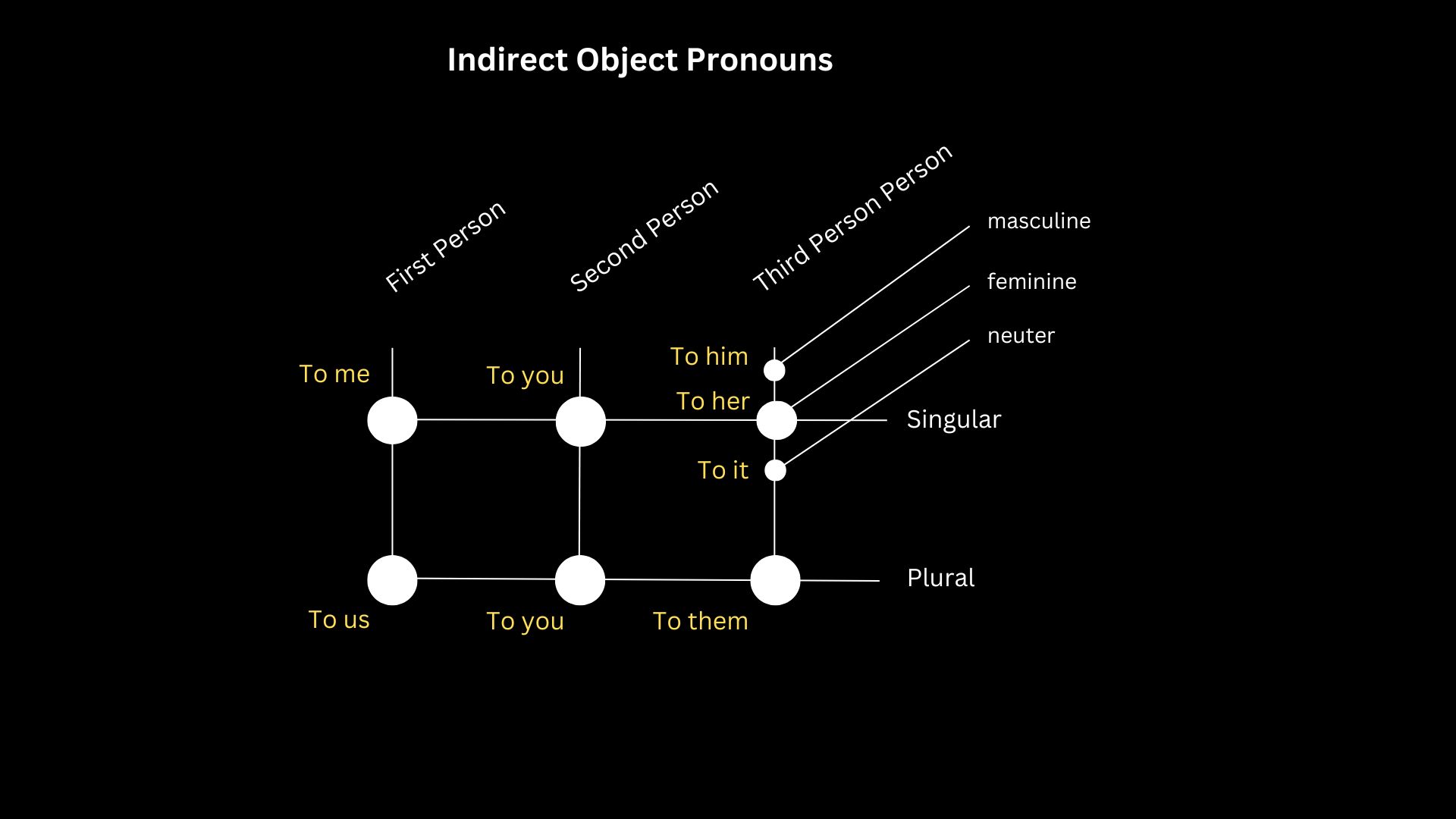
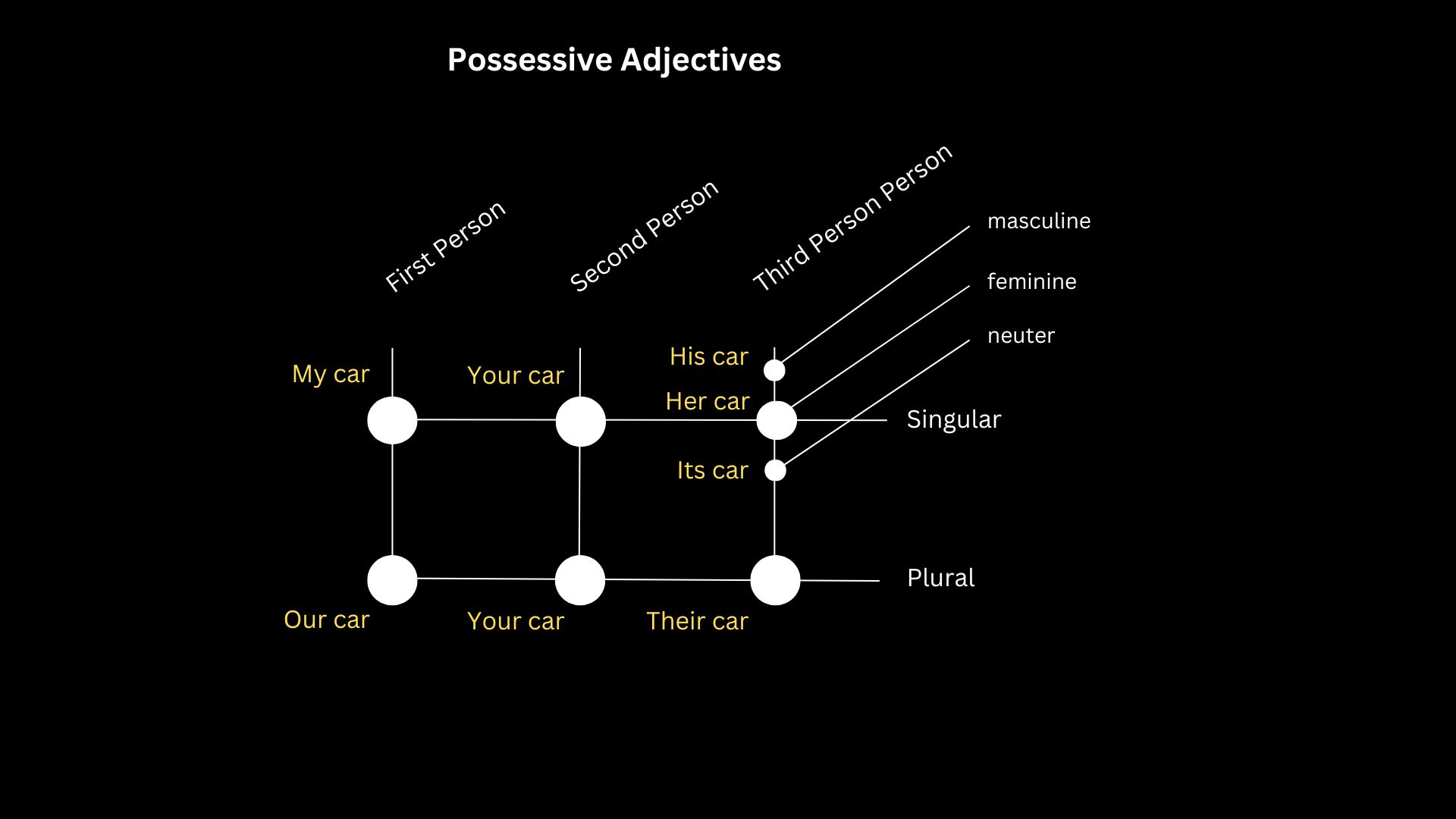
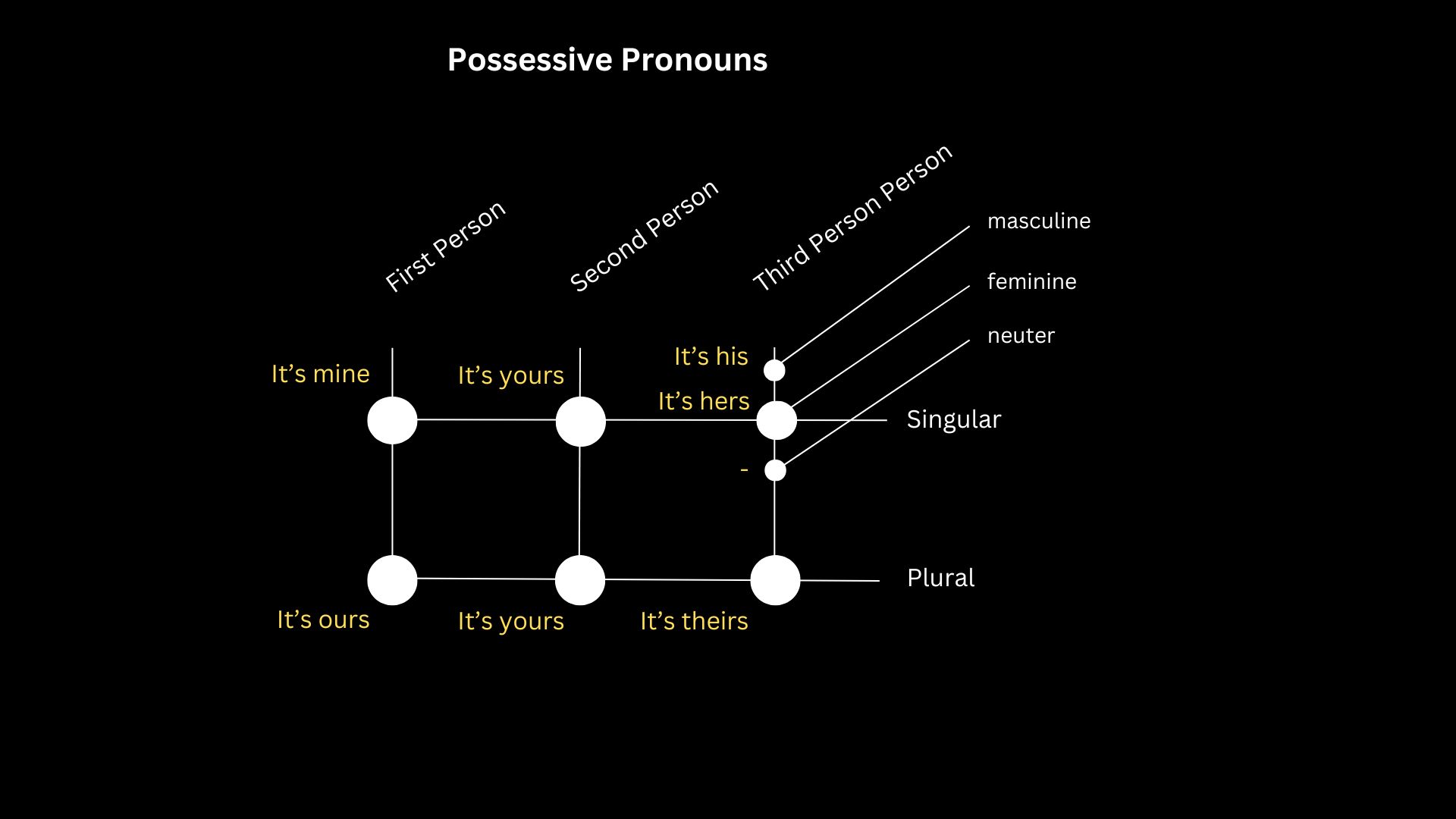
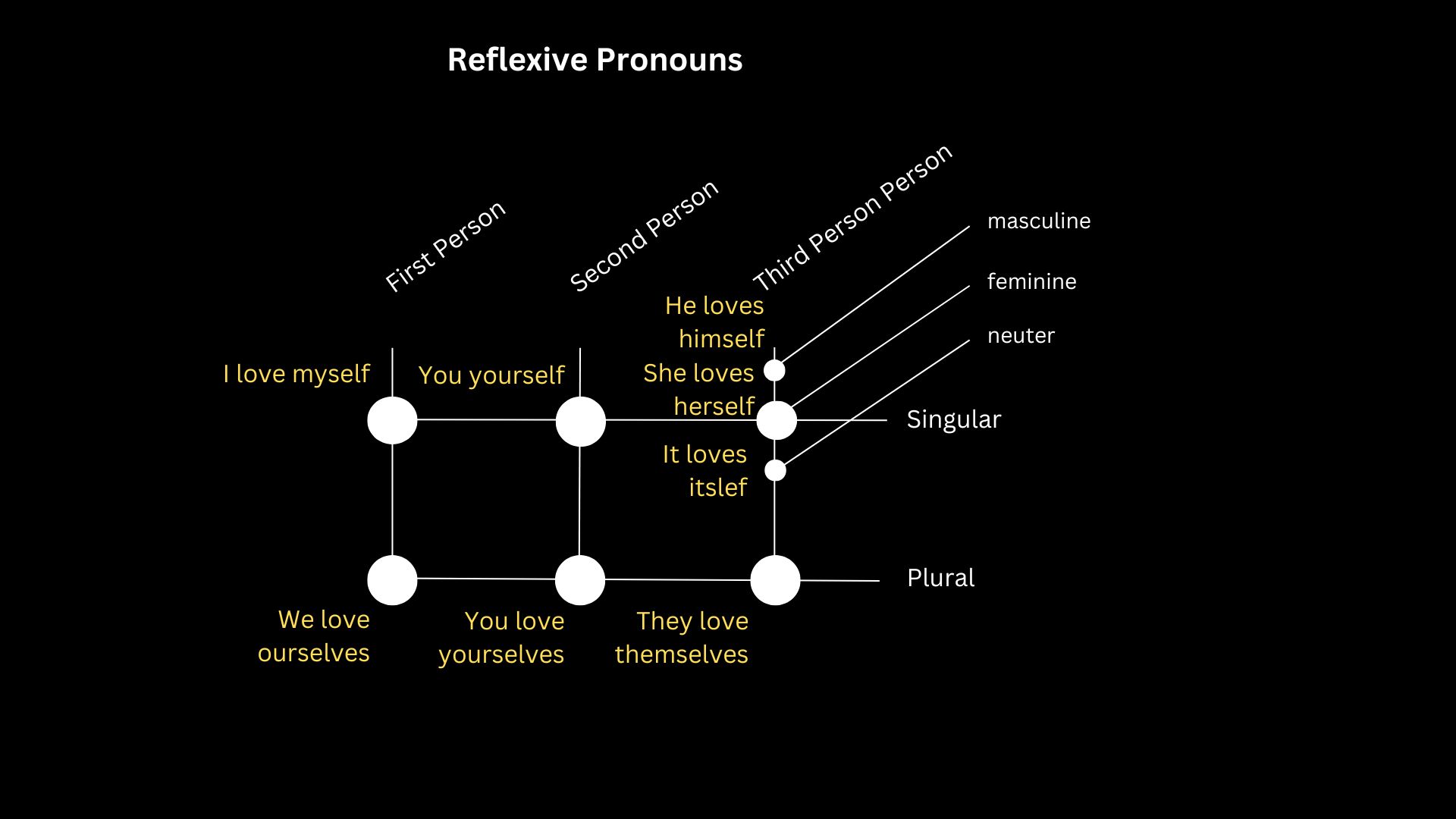
    MVS - The Six Circles Mantra

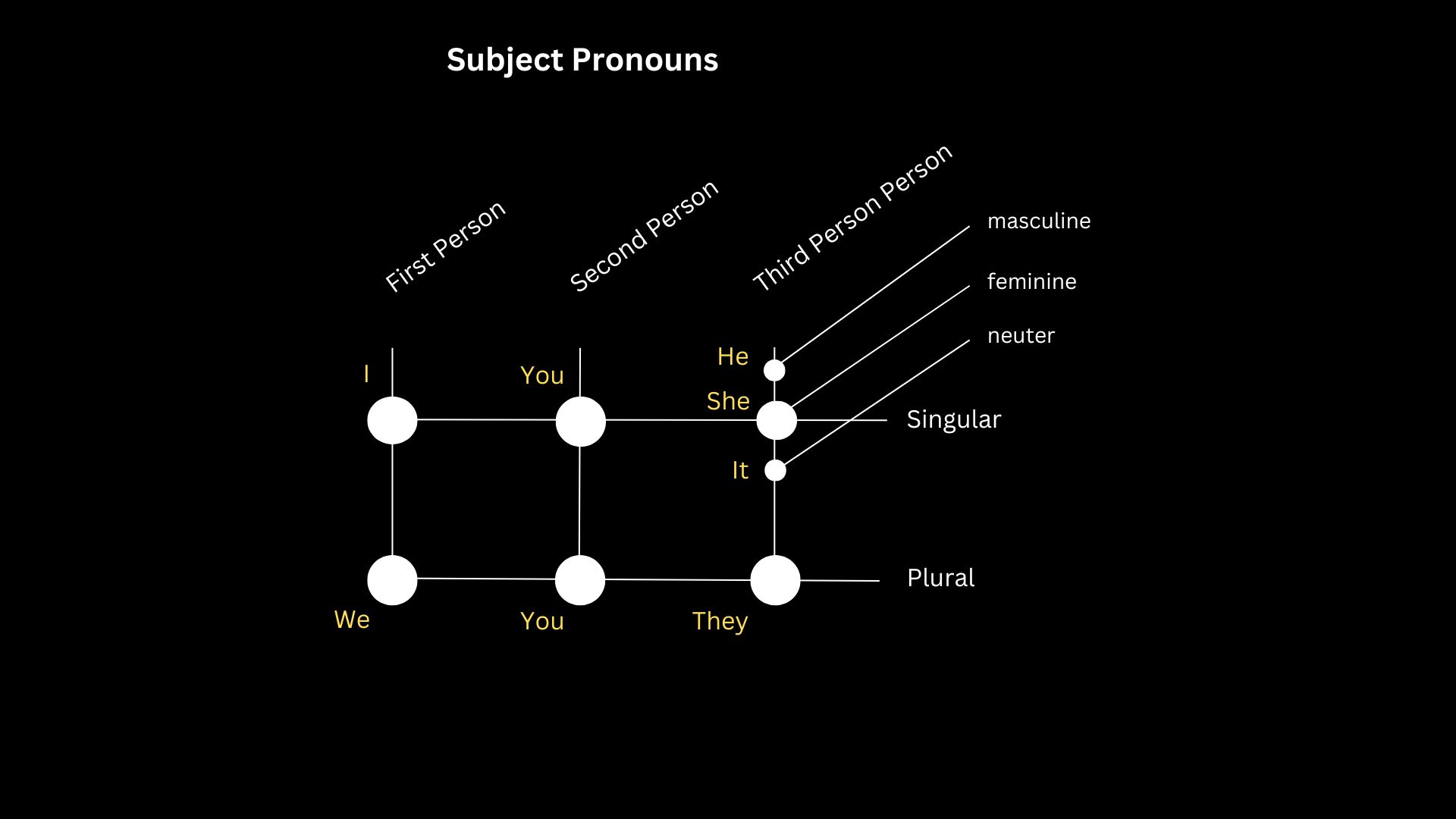
    First person, second person, third person singular

    First person, second person, third person plural


    I, you, he/she/it

    We, you, they


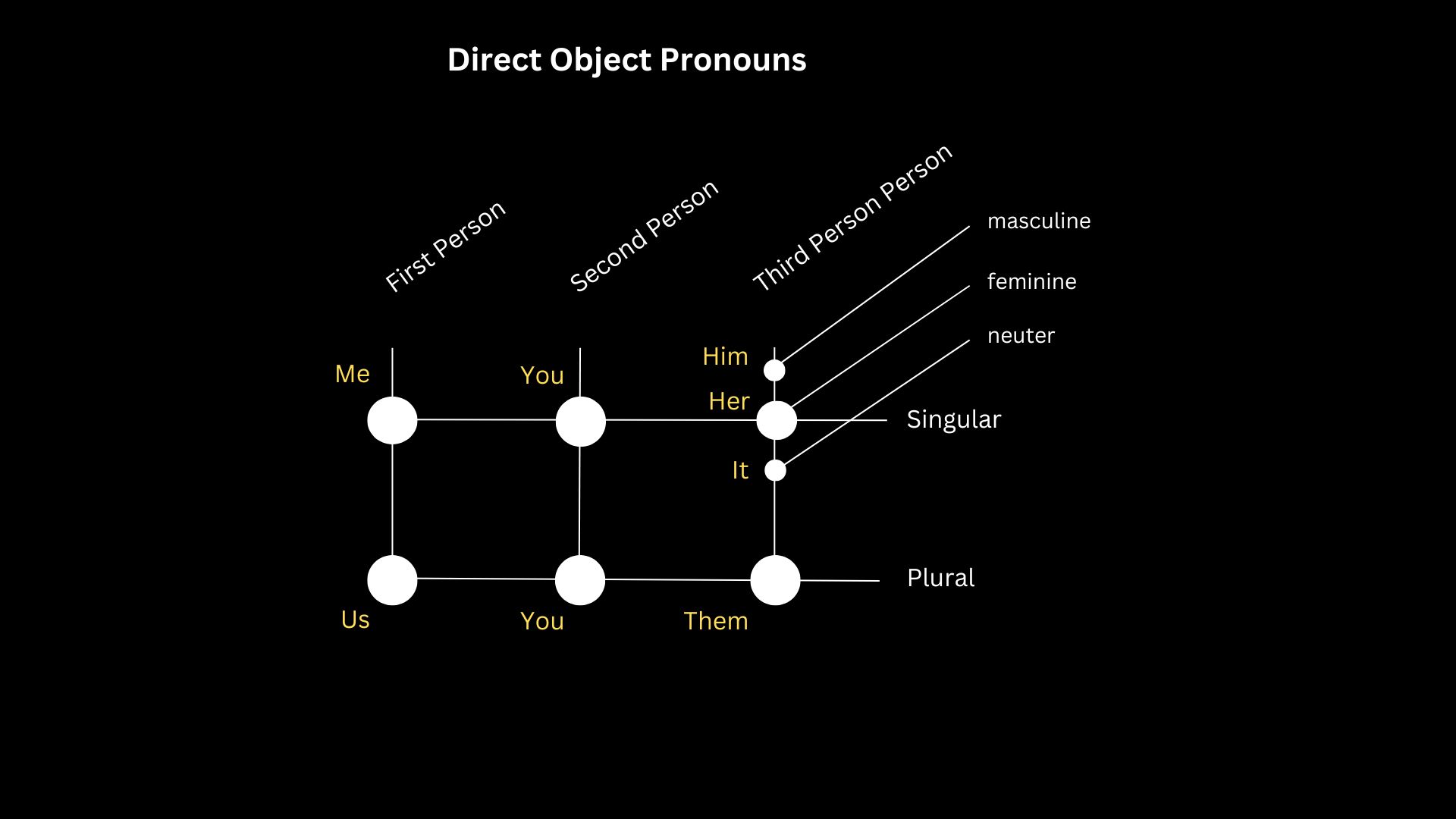
    Me, you, him/her/it

    Us, you/them


    To me, to you, to him/to her/to it

    To us, to you, to them


    My car, your car, his car/her car/its car

    Our car, your car, their car


    It’s mine, it’s yours, its his/its hers/-

    It’s ours, it’s yours, it’s theirs


    I love myself, you love your self, he loves himself/she loves herself/it loves itself

    We love ourselves, you love yourselves, they love themselves

    MVS - The Six Circles


    The Six Circles represent the Six Persons of English, and the six personal reference forms.

    The Personal Reference forms are:

    •  Subject Pronouns
    • Direct Object Pronouns
    • Indirect Object Pronouns
    • Possessive Adjectives
    • Possessive Pronouns
    • Reflexive Pronouns.

    Memorise them as soon as possible so that you can use them in sentences without mistakes and continue your progress.

          Creative Commons Attribution Share Alike 4.0 by Luke “Donovantius” Donovan gameofenglish.com 2025
          6 Circles Gif Builder by Luke Donovan

          MVS - The Book of Situations


          Every language uses verb tenses its own way but the situations of life that we describe exist independently of the language used to describe them.

          Study the Book of Situations to think like a novelist or a movie director and understand which verb tenses we use to describe the actions, states and situations that occur in the past, the present and the future on THE LINE OF TIME!

            Creative Commons Attribution Share Alike 4.0 by Luke “Donovantius” Donovan gameofenglish.com 2025